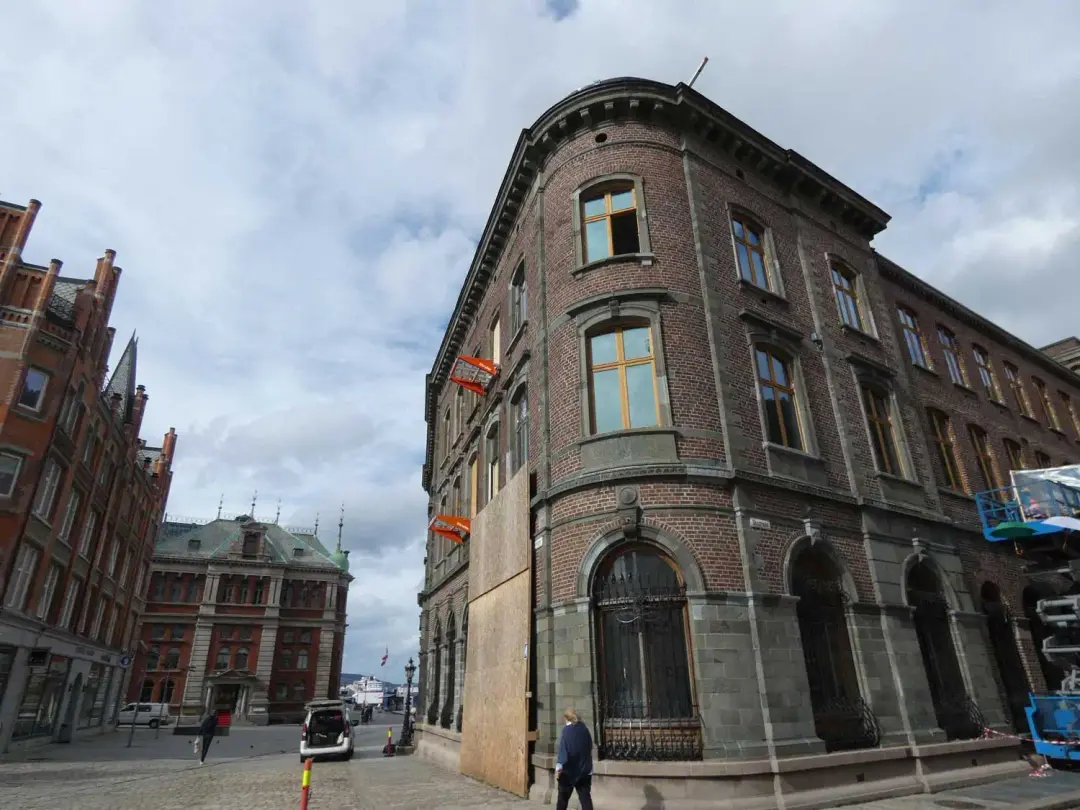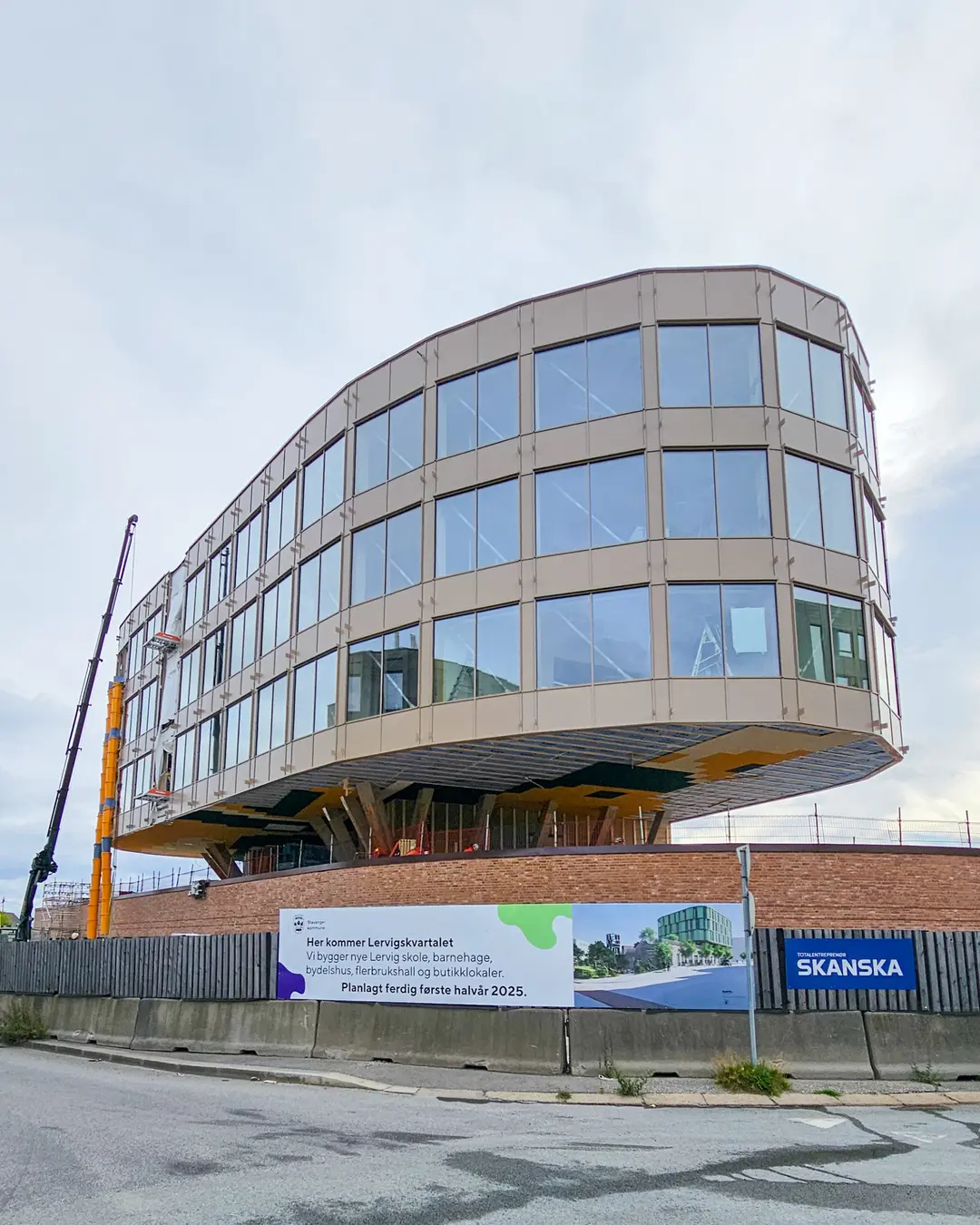
Skanska used Liftroller Floor on the Lervigskvartalet development in Stavanger, a job that puts a school, a nursery, a community centre, a multi purpose hall and retail spaces on one site. The roller system carried materials from the crane hook onto each floor, so trades were not queued behind a hoist or carrying loads up a stair.
The site
A mixed use development is really several different buildings sharing one set of gates. The school does not want what the retail tenancy wants, the hall has spans and heights the other structures do not, and the ventilation and mechanical fit out runs through all of it. Each building type brings its own material list and its own sequence, and every one of them draws from the same yard.
That creates a queue. If everything has to go up one hoist, the hoist sets the programme for every trade on site, and the trade that misses its slot loses the day. Height is the other factor: once you are a few levels up, carrying anything by hand is off the table, and each extra storey adds to the time a hoist takes per load.
These jobs also run long. A handling method that is merely tolerable for a fortnight becomes a genuine problem when it has to hold up across a full multi building programme.
What they used
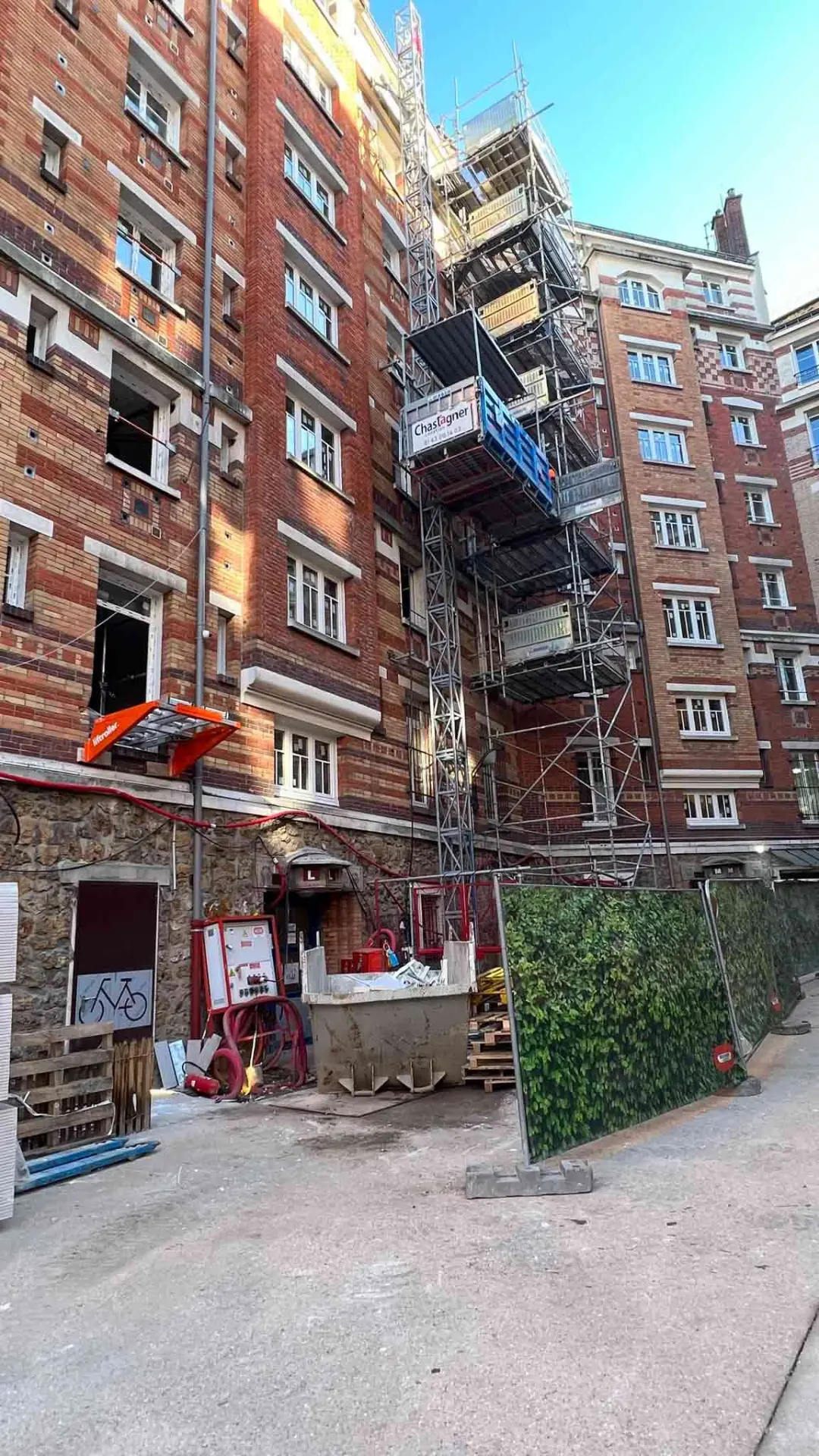
Liftroller Floor was the core of it, a lightweight roller system for multi storey buildings that forms a roller line between outside and inside so a crane load rolls straight onto the slab. The load is landed once, on the floor where it is needed, instead of landing in the yard and going up again later.
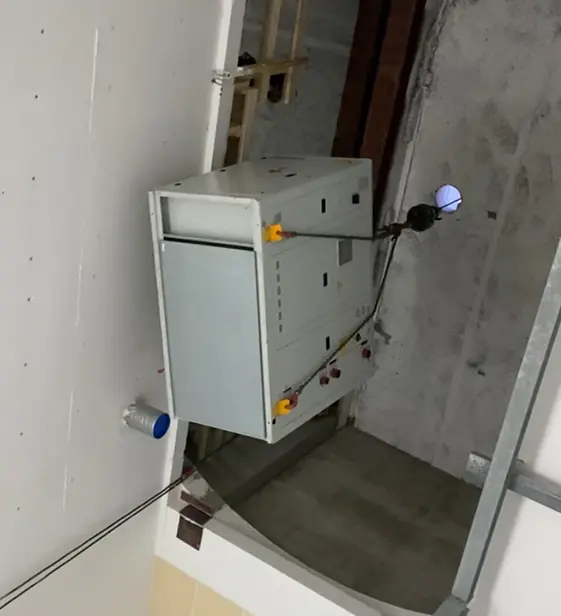
Around it, the Liftroller Table handles the horizontal runs once the load is inside, the Liftroller Stacker raises pallets to working height, and the E Wagon moves loads up to 1,200 kg along a floor on remote control. Ductwork and mechanical services are the classic case for that combination, and our page on HVAC and mechanical services handling sets out why.
How it worked on site
The roller line runs out through the floor edge or the opening, the crane brings the load across, and it rolls back inside on the level. Once it is on the slab, it moves horizontally on rollers or on a wagon to the workface. The ventilation fitters on this job worked that way, getting duct and plant into position without a chain of hand lifts between the yard and the ceiling.
The other advantage on a multi building site is that the gear is light and portable. It gets set up where the crane is working today and moved on tomorrow, which suits a job where the active face keeps shifting from one structure to the next.
What it changed
Material flow stopped being tied to a single vertical route. Loads went where they were needed, while the crane was already there, and the trades spent less of the day moving things and more of it installing them. On a development delivering a school, a nursery, a hall and shops to one district, keeping that flow steady is most of the programme.
If you are weighing a hoist against a platform for a multi storey Sydney job, our comparison of a material hoist against a loading platform covers the decision properly. For anything you want looked at on site, talk to our Sydney team.