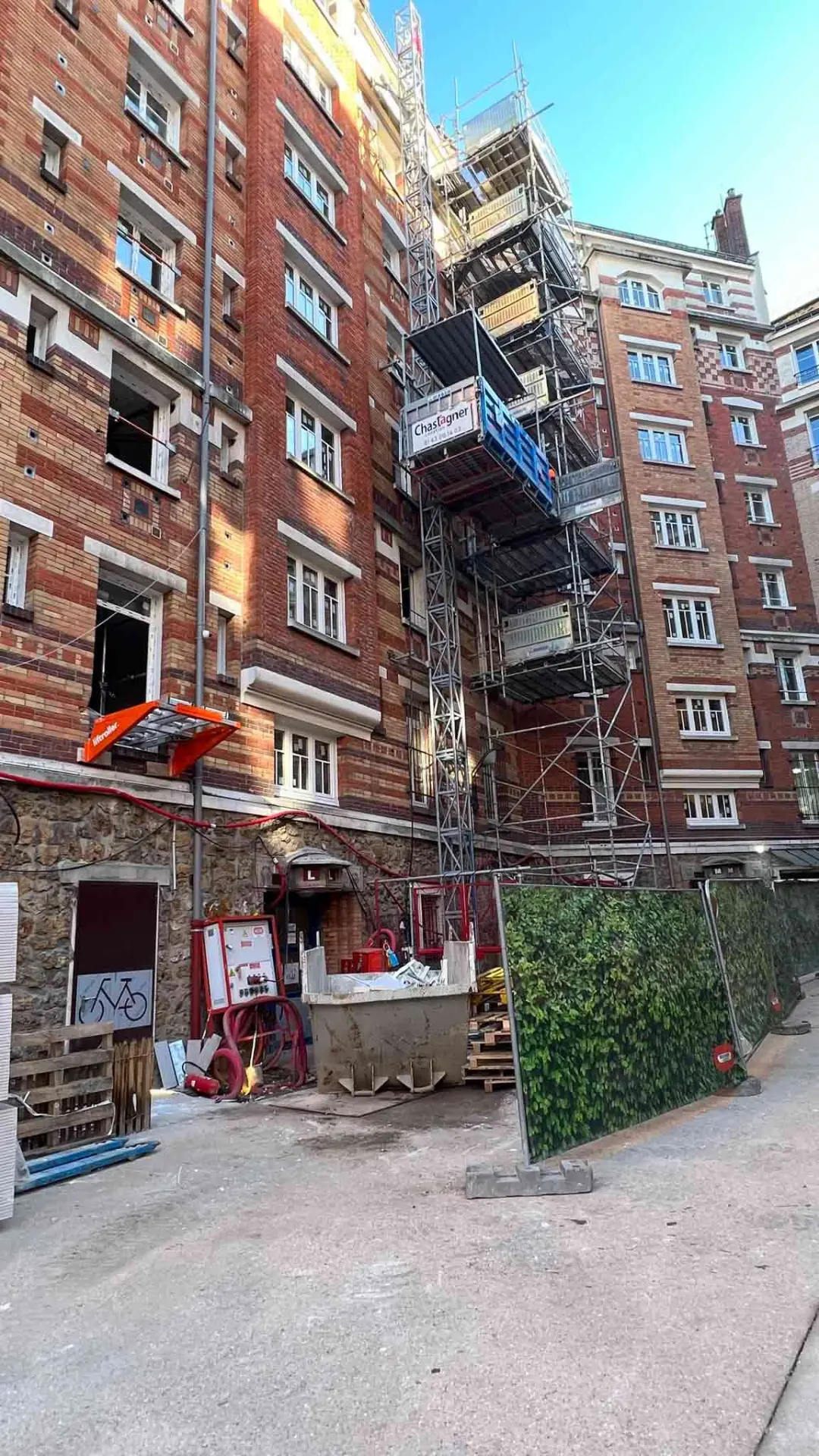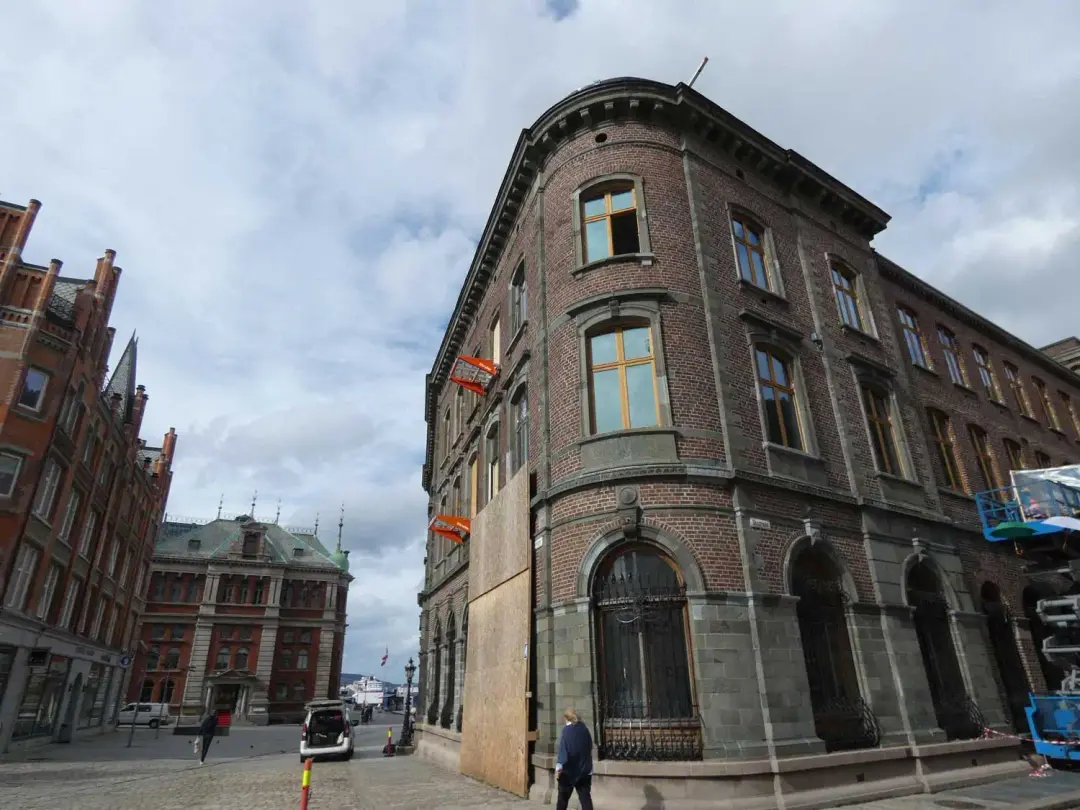
Opus XVI in Bergen was turned into the Edward Grieg Heritage Hotel behind a facade nobody was allowed to alter. Liftroller Wall did the loading, locking into existing openings so materials could come in at the level they were needed on without a mark being left on the outside of the building.
The site
A protected facade is a hard constraint, not a preference. You cannot core a hole for a chute, you cannot bolt a bracket through the render, and you cannot hang a bay off the wall the way you would on a new build. Whatever you use has to grip what is already there and come off again cleanly at the end.
The inside was a full remodel. Rooms, services and finishes all had to be stripped and rebuilt to hotel standard, which means a constant flow of material in and waste out through the same restricted openings. Hotels in old city centres rarely have a service yard either, so the street frontage is doing all the work.
There is also the question of what is around you. Heritage buildings in a city centre sit hard against neighbours and footpaths, so scaffolding a loading bay across the front is often either not allowed or not worth the approvals and the street occupation it needs.
What they used
The Liftroller Wall suits this job because of how it attaches. It is a mobile loading platform rated to 1,200 kg that locks into an existing window or facade opening with a patented lock, leaving no facade damage, and it assembles in roughly ten to fifteen minutes without tools. The opening becomes the loading point, so no new hole and no fixings into protected fabric.
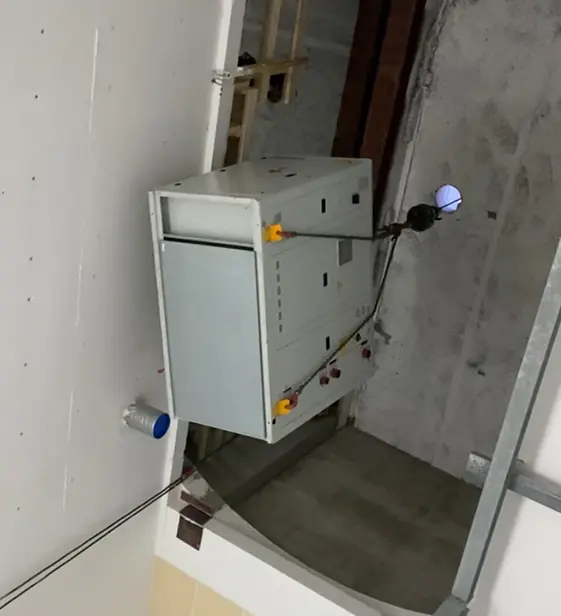
Once the load is inside, it still has to travel. The Liftroller Table gives an adjustable roller surface for horizontal moves, the E Mover is a compact electric mover for tight interiors and finished corridors, and the Liftroller Stacker raises pallets to working height so nothing gets lifted off the floor by hand. If the facade itself is being reglazed or panelled, our page on facade and curtain wall handling covers that side.
How it worked on site
The platform goes into an opening on the floor being worked, a crane or telehandler brings the load up to it, and the material comes off the platform and straight into the room. Because it goes up in ten to fifteen minutes and comes down as quickly, it follows the trades through the building instead of forcing everything through one fixed point.
That matters on a remodel where different floors are at different stages. The finishing crew on one level and the strip out crew on another can both be fed without one waiting on the other's access.
What it changed
The hotel was rebuilt inside while the protected exterior stayed as it was, and the handling method never became the reason a decision had to go back to the heritage authority. Materials landed where they were used, which is the point of loading in at height rather than at the kerb.
Sydney has the same problem on plenty of heritage listed buildings and older city stock. There is a broader rundown of the options in our loading platform hire guide, and if you have a facade you are not allowed to touch, talk to our Sydney team.