Material Hoist vs Loading Platform: Which One Does Your Site Actually Need?
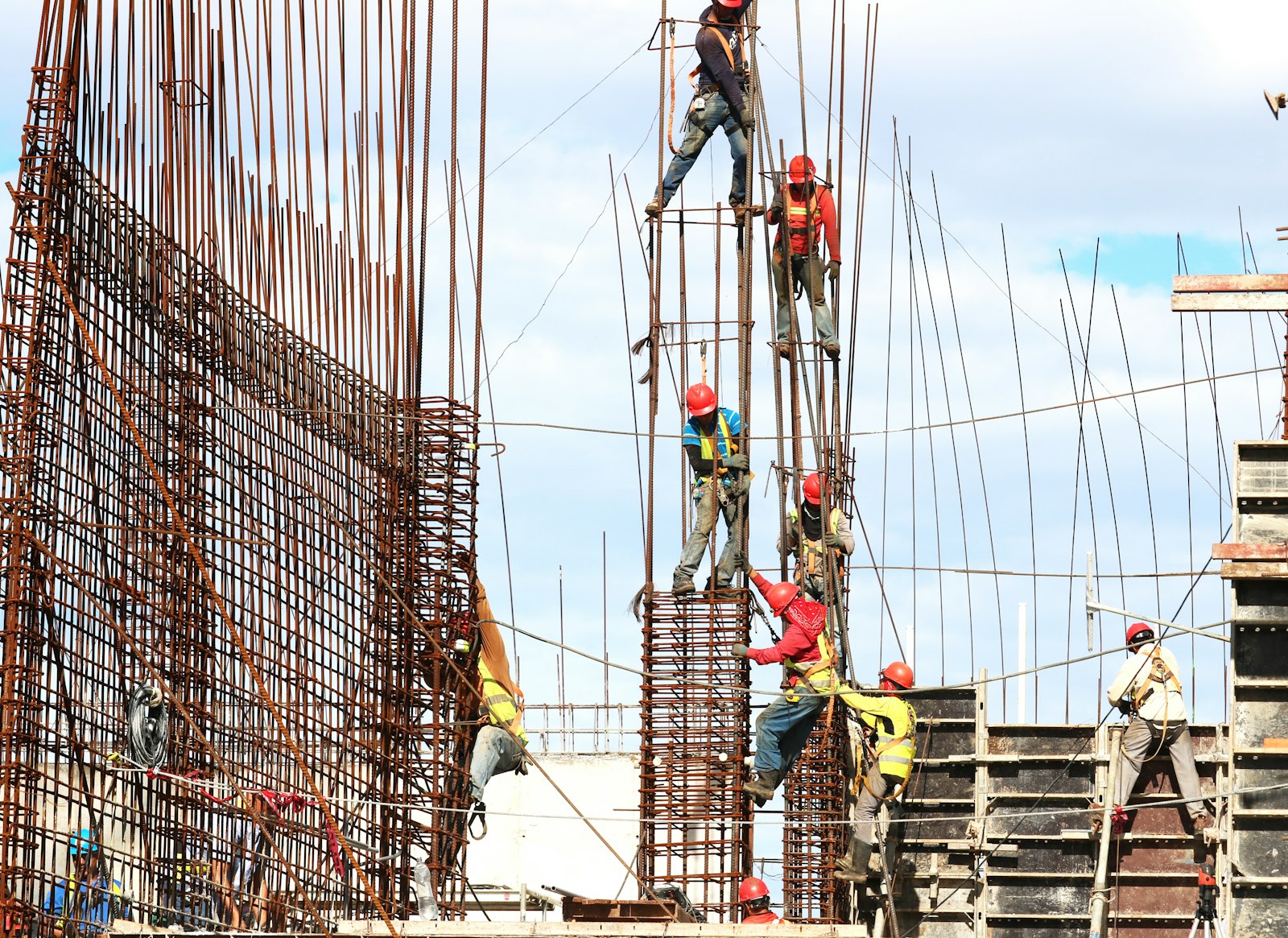
Get a quote for your site
Leave your details and we'll call you back with pricing and the right system for the job.
Pick a material hoist when you need to move material up and down all day, every day, on a structure tall enough to justify a tied mast. Pick a loading platform when material arrives by crane in batches and you need a safe place to land it on each level. They are not competing products. One is a transport machine, the other is a landing point.
Most people searching for material hoist hire have already decided the machine is the answer. Sometimes it is. On a 22 level tower with a 14 month programme and clear ground, a hoist earns its keep. On a level 4 fit out with 11 weeks on site, it is the wrong tool.
What does a material hoist actually do?
A material hoist (also called a materials hoist or a construction hoist) is a powered cage running up a vertical mast bolted together in sections and tied back to the structure. It runs on its own power, on your schedule, and does one job: move material from the ground to a level, over and over.
What that means on site:
- The mast is a fixture for the length of the hire. Erected, tied, inspected, then it stays put.
- It needs a prepared, level ground base with adequate bearing capacity and an exclusion zone at the bottom.
- It needs a licensed operator. Hoist operation sits under SafeWork NSW high risk work licensing, so you carry that labour cost every shift it runs.
- Throughput is high. Once commissioned, you shift pallets, gyprock, tools and crew without booking anything.
That is the whole argument for a hoist, and it is a strong one. Nothing else moves material vertically as fast or as predictably.
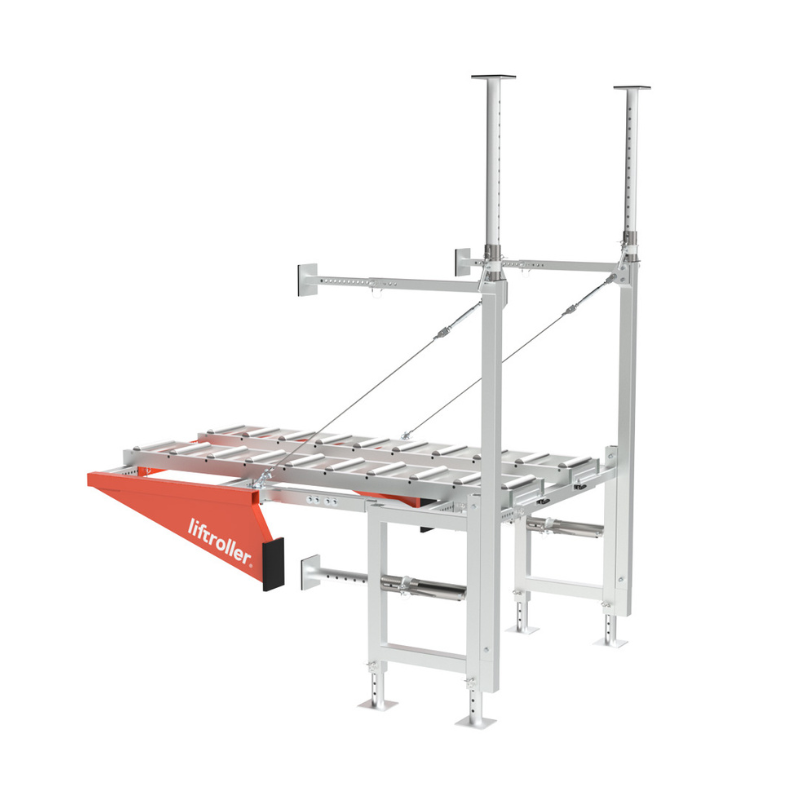 The Liftroller Wall is a landing point, not a transport machine. It locks into an existing opening and takes up to 1,200 kg.
What does a loading platform do instead?
A loading platform is a deck that cantilevers out from a floor slab or locks into an existing facade opening. The crane lands a pallet on it, the load gets moved inboard, and the crane goes back to the next lift. No motor, no mast, no daily operator. It is a landing point, not a transport machine.
That changes the logistics profile:
- It gets used intermittently, when deliveries arrive, not continuously through the shift.
- It needs no ground footprint. It lives on the level it serves.
- It moves. When level 6 is done, it goes to level 7, or level 12, or the other face of the building.
- It depends on crane availability. No crane window, no delivery. That is the real trade off.
The Liftroller Wall mobile loading platform is one version. Rated to 1,200 kg, it locks into an existing window or facade opening and assembles in roughly 10 to 15 minutes without tools. The patented lock leaves no facade damage. For deck types compared side by side, start with our guide to loading platform hire in Australia.
Material hoist vs loading platform: what is the real difference?
| Factor | Material hoist | Loading platform |
|---|---|---|
| Capacity | Varies with model and mast configuration | Typically 1,000 kg upwards. Liftroller Wall is 1,200 kg |
| Setup time | Days, plus engineering, ties and certification | Minutes to hours. Liftroller Wall goes in around 10 to 15 minutes |
| Operator licensing | Licensed hoist operator every shift | No hoist licence. Site competency plus a rigger for the crane lift |
| Ground footprint | Prepared base and exclusion zone required | None. It sits on the working level |
| Facade impact | Ties attach to or penetrate the structure | Cantilever decks need slab access. Window mounted units leave no damage |
| Utilisation | Continuous, all day | Intermittent, tied to crane windows |
| Short programme | Erect and dismantle can eat the whole benefit | Suits short programmes well |
| Best fit | Tall new build, long programme, heavy daily volume | Fit out, refurbishment, staged deliveries, tight sites |
When is a material hoist the right call?
Be honest about this one. A hoist is the right machine when most of the following are true.
The structure is tall. Above 8 to 10 levels the case builds, and strengthens every level after. Crane time to the top of a 30 level tower is slow and expensive.
Demand is continuous. If crews call for material every hour of every shift, a machine that runs on demand beats waiting for a crane window.
The programme is long. Engineering, erection, ties and commissioning are fixed costs. Spread across 14 months they disappear. Spread across 9 weeks they dominate.
You have the ground. A hoist needs a base, an exclusion zone and a clear run up the face, and that space has to stay available.
The mast can be tied. The structure has to accept ties at the required spacing. On a new build that gets planned in.
People need to move too. Some hoists are rated for personnel. If you are shifting crews as well as pallets, that changes the maths.
Tick five or six of those and hire the hoist. That is the correct answer and nobody should talk you out of it.
Weighing up Liftroller for a job?
Leave your details and we'll call you back with pricing and the right system for the load.
When is a material hoist the wrong call?
Just as honestly, the machine is the wrong answer when:
It is a fit out or refurbishment. The building exists, the lifts already run, and there is nowhere sensible to stand a mast. You need material landed on a level.
The facade cannot take it. Heritage frontage, completed curtain wall, or a client who will not accept tie penetrations. A window mounted platform solves that. A mast does not.
The programme is short. Under roughly 12 weeks, the erect and dismantle cycle plus engineering swallows the productivity gain.
There is no external space. Inner Sydney sites with a zero lot line, active footpaths, or no hoarding approval.
The landing point has to move. If work runs across several levels and faces at once, a fixed mast serves one line. A platform follows the work.
Volume is lumpy. If material turns up twice a week on a truck, you pay for a machine and an operator to stand idle in between.
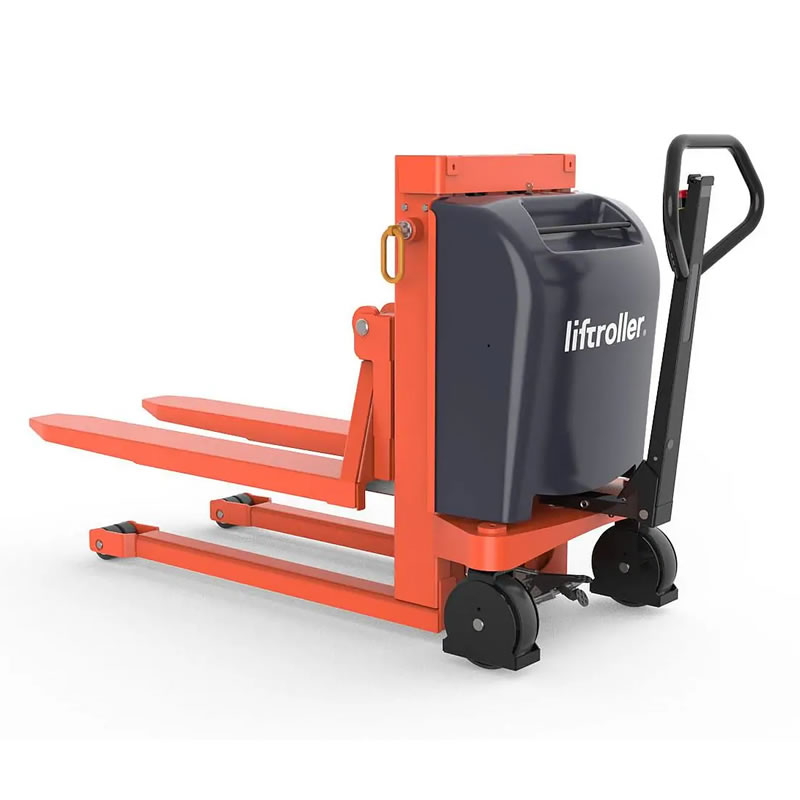 A Liftroller Stacker covers the short vertical moves inside the floor, which is work a tied mast hoist cannot do.
What happens after the material lands?
Getting a pallet to level 12 is half the job. Moving it 40 metres across a floor with penetrations, propping and three other trades in the way is the other half, and it usually gets done by hand. A hoist does not fix that, and neither does a platform.
The Liftroller Floor system moves material across multi storey floors, the Liftroller E Wagon is a remote controlled electric wagon rated to 1,200 kg, and the Liftroller Stacker gives you powered raise and lower at the workface. On the Opus XVI hotel remodelling job with a protected facade, the binding constraint was the facade rather than the height, which ruled a mast out before anyone priced one.
What actually drives the cost of each option?
We do not publish rates, because the honest answer depends on your programme. The cost drivers are no secret though.
For a material hoist:
- Erection and dismantle labour, plus crane time to do both
- Engineering design, tie design and certification at each stage
- A licensed operator for every shift it runs
- Extra mast sections and ties as the building climbs
- Hoarding, ground works and council approval for the footprint
- Weekly hire across the full duration, including quiet weeks
For a loading platform:
- Unit hire, per platform, per level in use
- Crane time per delivery, usually the dominant variable
- Relocation labour between levels
- Slab penetration or propping, for cantilever decks only
A hoist front loads the cost and gets cheaper per lift the longer and busier the job runs. A platform has almost no setup cost and stays proportional to how many deliveries you make. Our cost savings breakdown walks through the logic. If you want it priced against your actual programme, talk to our Sydney team with your level count, programme length and delivery frequency.
Can you run both on the same job?
Plenty of large jobs do. The hoist handles structure and early trades while the building goes up. Loading platforms handle staged deliveries to completed levels behind the leading edge, then take over once the hoist comes down and fit out is still running. That last phase catches sites out: the hoist is gone, the facade is on, and every pallet ends up in the passenger lift.
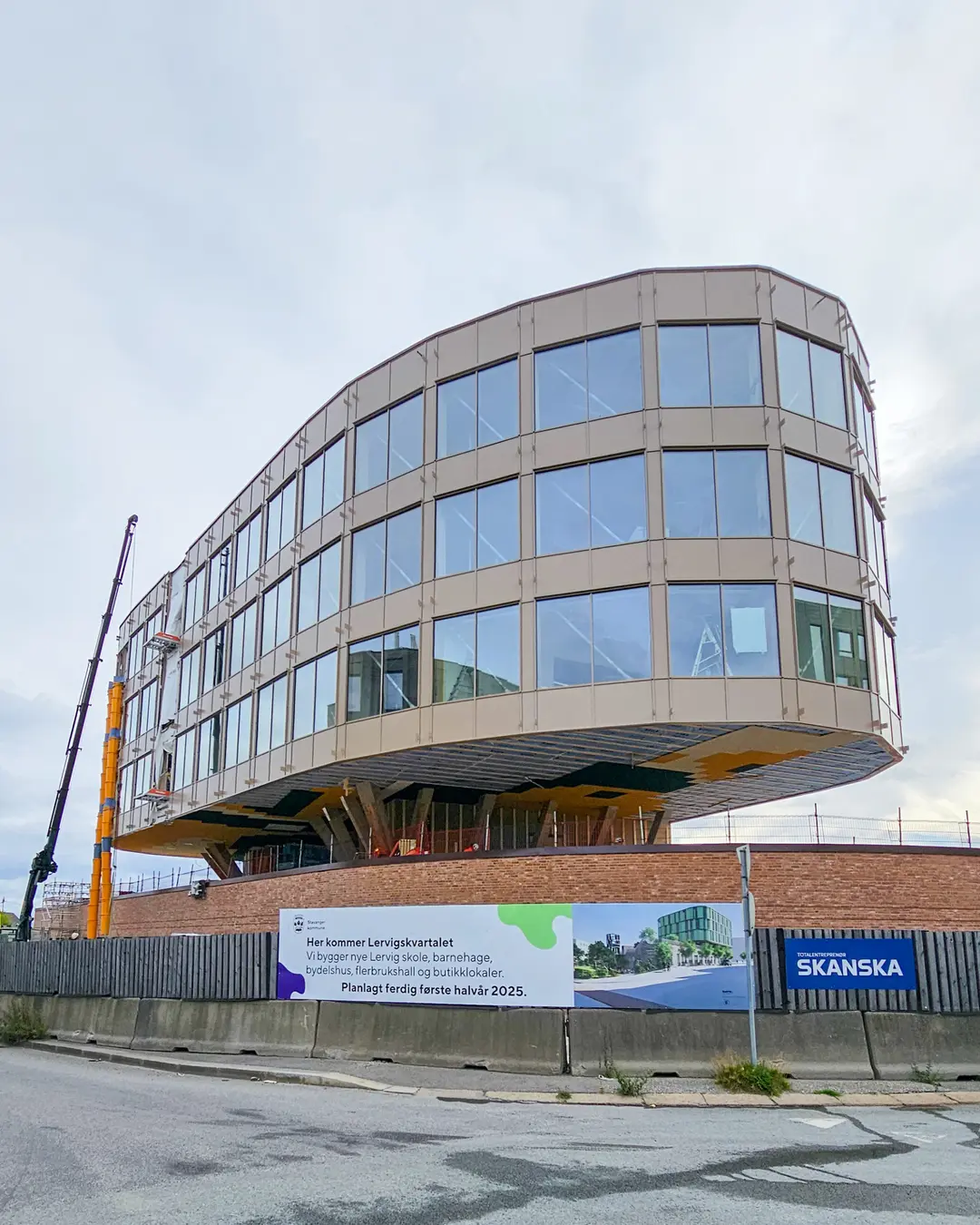 Skanska in Norway used the Liftroller Floor on a commercial build where a tied mast was not practical.
Where to go from here
If the job is tall, long and busy with ground to spare, hire the material hoist. If it is a fit out, a refurbishment, a short programme or a site with no external space, a loading platform does the delivery work for a fraction of the setup. Many jobs need both. If you are weighing up deck types, our comparison of Cantideck style loading platforms and the Liftroller Floor goes deeper.
Quick answers
Frequently asked questions
Mostly. Construction hoist is the broader term, covering material only hoists and personnel and material hoists. Material hoist and materials hoist usually mean a unit rated for goods, not people. If you need to carry crew, say so at enquiry stage. A personnel rated machine has different guarding, controls and certification, and getting that wrong after the mast is up is expensive to fix.
Yes. Hoist operation is high risk work under SafeWork NSW, so the operator needs the relevant class of licence. That is a real daily cost and it applies every shift the hoist runs. Loading platforms need no hoist licence. You still need a rigger or dogger for the crane lift, but that person is usually on site already.
There is no hard line, but the case usually starts stacking up above 8 to 10 levels. Height alone is not enough. You also need a long programme, continuous demand and available ground. A 15 level building with a 10 week fit out scope and no external space is still a poor fit for a mast.
On the right job, yes. If deliveries arrive in batches and you have crane access, a platform does the same work without the mast, the ground footprint or the daily operator. On a job with continuous all day vertical demand it cannot. You would be booking crane windows constantly and the crane becomes the bottleneck. Match the tool to the demand pattern, not the height.
That usually rules out a tied mast, because the ties have to attach to something. A window mounted platform is the normal answer. The Liftroller Wall locks into an existing opening and its patented lock leaves no facade damage, so you can deliver to a protected facade without touching it. Our Liftroller system overview explains how the lock works.
Yes. We run a free on site trial from our Hillsdale base in Sydney, so you can see the gear working on your slab, with your material and your crew, before committing. That is usually the fastest way to settle an internal argument about handling method. Call 1300 222 300 or send through your programme details.
Talk to our team about Liftroller
Tell us about your loads and access constraints and we'll recommend the right Liftroller setup. No obligation.
Related Articles
Loading Platform Hire in Australia: Types, Costs and How to Choose
The four ways to land material at height in Australia, what separates them, what actually drives the hire cost, and how to work out which one belongs on your site.
Loading Platforms on Sydney Sites: What Works in the CBD and Inner Suburbs
Road approvals, night work limits, heritage facades and the date your crane leaves site decide the landing method on a Sydney job. Here is what works where, from The Rocks to a Surry Hills warehouse conversion.
What Drives the Cost of Loading Platform Hire in Australia
The weekly rate is the smallest part of what you pay. Here is what actually moves a loading platform hire cost, and the six things to ask for so you can compare two quotes properly.