Crane Loading Platform vs Window Opening Delivery: The Real Cost Per Lift
Get a quote for your site
Leave your details and we'll call you back with pricing and the right system for the job.
Landing material at height costs you crane time, hire time, and labour time after the load touches down. The hire rate is usually the smallest of the three, which is why comparing hire quotes tells you almost nothing. Work it out per tonne landed instead of per week, and the ranking of a fixed cantilevered crane loading platform against a window opening system can flip on the same job.
Here is the arithmetic, in variables so you can drop your own rates in. No dollar figures, because crane and hire rates move by job, city and month.
What actually drives your cost per tonne landed?
One line, six numbers:
Cost per tonne landed = ((R x Hc) + Ha + (L x Hm)) / Tn
- R = all in crane hourly rate, including the crew standing under the hook
- Hc = crane hours consumed landing the material
- Ha = platform or loading deck hire apportioned to that period
- L = labour rate per hour for the gang moving material
- Hm = labour hours moving material from the landing point to the work face
- Tn = tonnes landed in that period
Hc is where the money sits. A crane costs more per hour than anything else on that list, and every hour you take is an hour the formwork gang and the steel fixers do not get. For background on platform types, start with our guide to loading platform hire in Australia and how to choose a type.
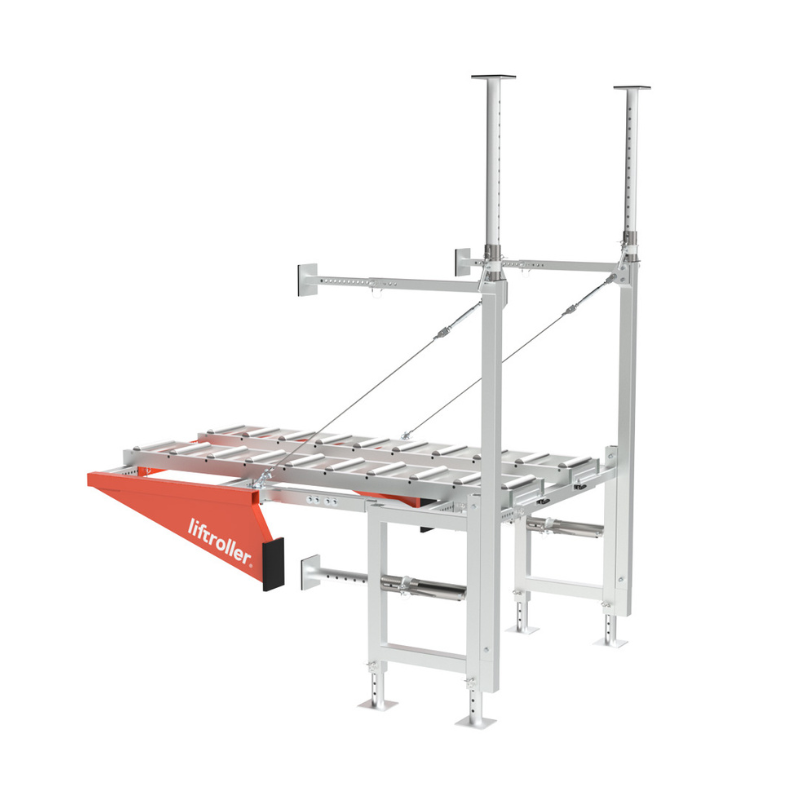 The Liftroller Wall assembles in roughly ten to fifteen minutes without tools, which takes the repositioning lift out of the cost model entirely.
How many crane cycles per hour can each method really do?
Hc = Tn / (C x Tc), plus the lifts the method itself consumes
- C = cycles per hour sustained, hook off to hook off
- Tc = tonnes per cycle, capped by the lower of crane capacity at radius and platform rating
Two things set C: landing time, how long the crane sits loaded while the gang unhooks and clears the deck, and queueing, whether the crane swings straight to the next pick or hovers while pallets get dragged clear.
A fixed cantilever loading platform lands big and lands slow. Rated from 2,000 kg up, so Tc is high. But it is one shared surface that must be fully cleared before the next load, and on a busy floor that is where C falls over.
A window opening system such as Liftroller Wall has the opposite shape. Rated 1,200 kg, so Tc is lower. It locks into an existing window or facade opening at floor level, the load lands level with the slab, and the gang wheels it straight in. Shorter clear time, higher C. You are trading tonnes per cycle for cycles per hour. Which one wins depends on whether the crane is your bottleneck or your floor gang is.
How many crane lifts does the method itself eat?
This is the line most estimates leave out, and on a repeating floor cycle it usually decides the answer.
A fixed cantilevered deck gets craned into position and craned out again every time it moves up a floor. Call that Fl lifts per deck per floor. Those lifts land zero tonnes. They are pure overhead on Hc, and they land in the week the crane is already critical path.
A window opening platform goes up in the hoist and locks into the opening by hand. Liftroller Wall assembles in roughly 10 to 15 minutes without tools, and the patented lock leaves no facade damage. Fl is zero. Across a 20 level tower with two decks moving every floor, that is a block of crane time that never shows on a hire invoice.
Weighing up Liftroller for a job?
Leave your details and we'll call you back with pricing and the right system for the load.
What does the comparison look like side by side?
Fill in your own numbers. The table shows which way each variable moves, not values.
| Variable | Fixed cantilevered deck | Window opening platform | Why it matters |
|---|---|---|---|
| Tc, tonnes per cycle | Higher, 2,000 kg and up | Lower, 1,200 kg | The deck wins on raw capacity |
| C, cycles per hour | Lower, one deck to clear | Often close to double on a busy floor | Set by clear time, not the rating plate |
| Fl, repositioning lifts per floor | One or more per deck | Zero | Crane hours that land no material |
| Setup and strike | Crane plus crew, hours | Two people, 10 to 15 minutes | Hits Hc, not just labour |
| Hm, labour hours after landing | Higher, one landing point | Lower, land near the work face | The largest hidden cost |
| Ha, hire apportioned | Per deck, per week | Per unit, per week | Compare per tonne, never per week |
| Making good | Tie backs and penetrations | None, patented lock | Rarely carried in the estimate |
Run it twice: once with C and Tc as you actually achieve them, once with Fl counted honestly across the whole floor cycle.
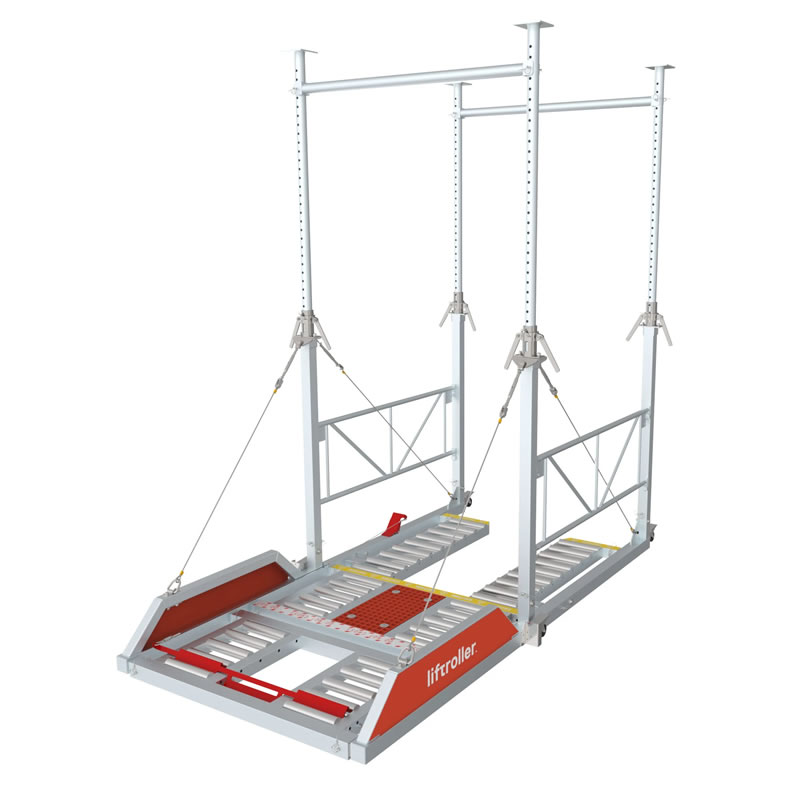 The Liftroller Floor stays with the trades rather than with the crane, so cycles do not queue behind a single deck.
Why does the labour after the load lands matter so much?
Hm is the quiet one. A pallet landed at the perimeter still has to travel across the floor plate, sometimes 30 or 40 metres, through stud walls and around service risers.
Two levers pull it down. Land closer to the work face, which is what multiple openings give you. And move material properly once it is inside. Liftroller Floor is built for that on multi storey work, and the Liftroller E Wagon carries up to 1,200 kg on remote control. If Hm is large, an extra cycle per hour at the crane will not save you.
Where does the fixed cantilevered deck genuinely win?
It wins on raw capacity. If you are landing 2,000 kg picks, or single items that cannot be broken down, no 1,200 kg system helps you. It wins on new builds where you work up floor by floor and the crane has spare capacity in the schedule. And it wins wherever a deck sits on one level for weeks, because Fl only bites when you reposition constantly.
It also wins where there is no opening yet. If you are still in structure, on an open slab edge, the deck is the answer. That argument is set out in full in our comparison of Cantideck style loading platforms against Liftroller Floor.
Where does the window opening system win?
Refurbishment and fitout, where the facade is on and you cannot cut a slab edge open. Jobs where crane time is contested, because Fl is zero and you never queue for a reposition. Occupied buildings, where a lift to move a deck means a street closure and a traffic management plan.
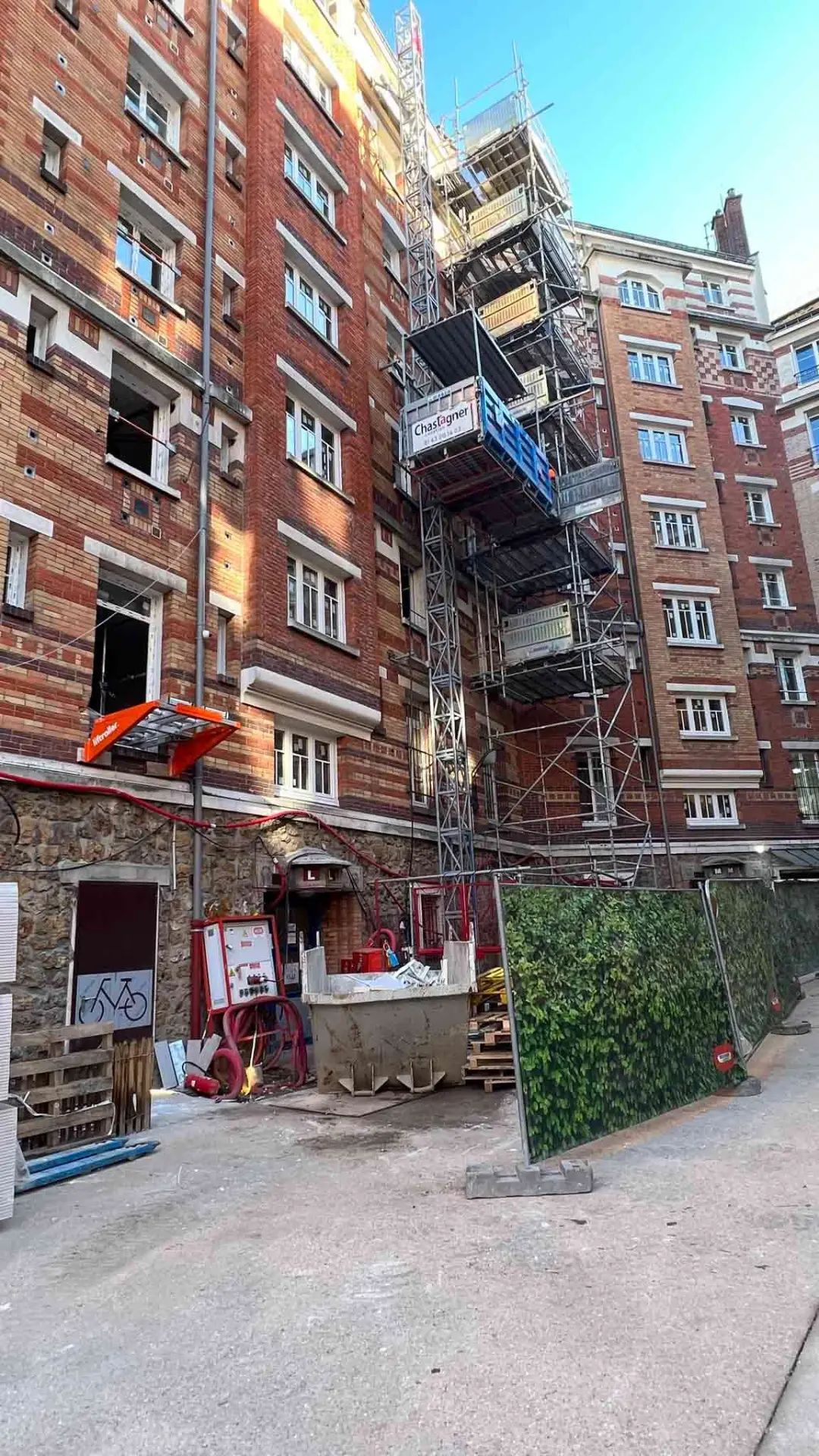
On the Liftroller in Paris renovation of 450 apartments that was exactly the driver: existing facade, live site, no appetite for repeated crane lifts just to shift a platform up a level.
 Skanska converted retail spaces using the Liftroller Wall, landing through the glazing line rather than building out from it.
How do you run these numbers on your own job?
- Get your all in crane hourly rate, R, including crew idle under the hook.
- Take Tn per floor off the material schedule, not from memory.
- Time five real cycles, hook off to hook off, to get C.
- Count Fl honestly across the whole floor cycle, up and down.
- Walk the floor plate and measure the distance to the work face for Hm.
- Put the hire figures in last. They are usually the smallest term.
Want a second set of eyes? Talk to the team in Hillsdale or call 1300 222 300. We are Sydney based and we offer a free on site trial, so you can time real cycles rather than argue brochure numbers.
The short version
The hire rate is not the cost. Crane hours are, and so are the labour hours after the load lands. A fixed cantilevered deck buys tonnes per cycle and pays for it in repositioning lifts. A window opening system buys cycles per hour and zero repositioning lifts, and pays for it in rated capacity.
Put your own numbers in the table and the answer takes about ten minutes. If you would rather we ran it against your actual floor cycle, get in touch.
Quick answers
Frequently asked questions
A steel deck that cantilevers out from the slab edge and ties back to the structure, so a crane can land material on it at height. Ratings usually start around 2,000 kg. The crane lands a load, the gang clears it inside, and the deck gets craned up to the next level once a floor is finished.
Not always. It replaces the deck on refurbishment, fitout and facade work where the envelope is already on and picks sit under 1,200 kg. On heavy structural work above that rating, or on an open slab edge with no opening to lock into, a fixed deck is still the right call.
Crane hourly rate times crane hours, plus hire apportioned to that period, plus labour hours after landing times labour rate, all divided by tonnes landed. That gives cost per tonne. Divide by tonnes per cycle for cost per lift. Hire is only one term of three, and usually the smallest.
Yes, in two places. It never needs a crane lift to reposition, because it goes up internally and locks in by hand in roughly 10 to 15 minutes. And shorter clear time per cycle means you sustain more cycles per hour on a congested floor. How much that saves depends on how contested your crane is.
Size on your heaviest single pick, not your average. Under 1,200 kg, an opening system covers it. Above that, or if you want to land full bundles to cut cycle counts, you need a cantilevered deck. The one pick that does not fit will cost you a separate crane arrangement.
A fixed deck usually needs tie backs and slab penetrations, and the repairs rarely appear in the original estimate. Liftroller Wall clamps into the existing window or facade opening with a patented lock, so there is no facade damage and no making good when it comes out. On heritage facades that alone can decide the method.
Talk to our team about Liftroller
Tell us about your loads and access constraints and we'll recommend the right Liftroller setup. No obligation.
Related Articles
Loading Platform Hire in Australia: Types, Costs and How to Choose
The four ways to land material at height in Australia, what separates them, what actually drives the hire cost, and how to work out which one belongs on your site.
Loading Platforms on Sydney Sites: What Works in the CBD and Inner Suburbs
Road approvals, night work limits, heritage facades and the date your crane leaves site decide the landing method on a Sydney job. Here is what works where, from The Rocks to a Surry Hills warehouse conversion.
What Drives the Cost of Loading Platform Hire in Australia
The weekly rate is the smallest part of what you pay. Here is what actually moves a loading platform hire cost, and the six things to ask for so you can compare two quotes properly.