Loading Platform Hire in Australia: Types, Costs and How to Choose

Get a quote for your site
Leave your details and we'll call you back with pricing and the right system for the job.
A loading platform is a temporary deck or landing system that lets a crane place material directly onto the floor of a building under construction, instead of leaving it in a compound at ground level for your crew to carry up. Hiring one usually means choosing between four methods: a fixed cantilevered deck, a scaffold loading bay, a mast climbing material hoist, or a system that lands through an existing window or facade opening. Which one suits your site comes down to four things: how much room you have outside the building, whether you can fix anything to the structure or the facade, how long you need it, and how often you are moving material once it is inside.
This guide covers all four, what separates them, what actually drives the hire cost, and how to work out which one belongs on your job.
What is a loading platform?
A loading platform is the interface between the crane and the floor. Material arrives on a truck, the crane picks it, and the platform gives that load somewhere safe and structurally sound to land at height. Without one, every pallet of plasterboard, every bundle of steel studs and every roll of carpet has to come in at ground level and go up by hoist, lift or hand.
The reason this matters is that logistics eat a much larger share of a project than most programmes admit. Material handling is one of the largest single consumers of labour hours on a fit-out or refurbishment, and it is also where most of the serious manual handling injuries come from. Getting the landing method right is not a detail. It changes your crane bookings, your labour allocation and your incident rate.
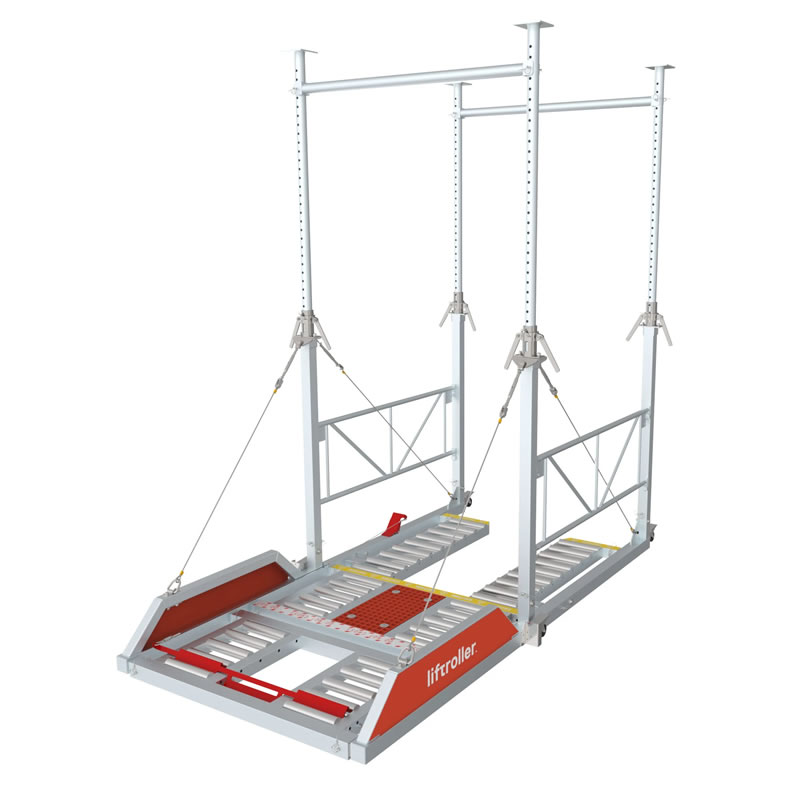 The Liftroller Floor forms a roller line between the outside and the inside of the building, so a crane load rolls straight onto the slab.
The four ways to land material at height
Australian sites use four broad methods. They are not interchangeable, and the right answer changes between a new build and a refurbishment.
Fixed cantilevered loading platform
A steel deck bolted or propped to the structure, extending out past the slab edge so a crane can land on it. Common brand names include SuperDeck, CantiDeck and Multideck. Capacity is high, often 2,000 kg or more, and once installed it stays put.
The trade-off is installation. It has to be fixed to the structure, it usually needs an engineer sign-off for the fixing detail, and moving it between floors is a crane job in itself. On a new build where you are working up floor by floor, that is fine. On a refurbishment with a facade you are not allowed to touch, it is often a non-starter.
Scaffold loading bay
A reinforced bay built into the perimeter scaffold. If you already have scaffold up, the marginal cost is low, which is why it is the default on a lot of Australian jobs.
The catch is that it ties your material logistics to your scaffold programme. When the scaffold comes down, the loading bay goes with it, and on most projects the scaffold comes down well before the fit-out finishes. That leaves the trades who move the most material with no landing point at exactly the moment they need one, which is the situation we work through in scaffold loading bay alternatives for tight city sites.
Mast climbing material hoist
A hoist car running on a mast fixed to the outside of the building. Good for continuous vertical movement over a long programme, especially on tall structures where you are running material up all day, every day.
We compare the two directly in material hoist versus loading platform. It is the most infrastructure-heavy option. The mast has to be tied to the structure, it needs a licensed operator in most configurations, and it occupies a footprint at ground level for the whole hire period. On a short fit-out it rarely pays for itself.
Window or facade opening delivery
A mobile platform that locks into an existing opening, so the crane lands the load through the window and the material rolls straight onto the floor. Nothing is fixed to the facade and nothing is bolted to the slab.
This is the method that has changed most in the last few years, and it is the one that suits Australian refurbishment and fit-out work best. The Liftroller Wall is rated to 1,200 kg, assembles in roughly ten to fifteen minutes without tools, and uses a patented lock that holds in the opening without damaging the facade, so there is no making good afterwards. The Liftroller Floor does the same job as a lightweight system for multi-storey buildings.
How they compare
| Fixed cantilever deck | Scaffold loading bay | Material hoist | Window opening system | |
|---|---|---|---|---|
| Typical capacity | 2,000 kg and up | Varies with design | 300 to 2,000 kg | Up to 1,200 kg |
| Setup time | Hours, crane assisted | Built with scaffold | Days | 10 to 15 minutes |
| Fixed to structure | Yes | Via scaffold | Yes, tied mast | No |
| Facade impact | Fixing points, making good | Scaffold ties | Mast ties | None |
| Moves between floors | Crane lift | No | Continuous | Carried by hand |
| Needs scaffold | No | Yes | No | No |
| Best for | New build, floor by floor | Sites already scaffolded | Tall, long programmes | Fit-out, refurb, heritage, tight sites |
How to choose: five questions about your site
Work through these in order. The answers usually eliminate two of the four options before you get to price.
1. Is there room outside the building? On a confined CBD site with no setback, no footpath closure and traffic on two sides, a cantilever deck and a hoist both need space you do not have. A window opening system needs none, because everything happens inside the slab edge.
2. Can you fix to the structure or the facade? Heritage listings, curtain wall warranties, completed facades and post-tensioned slabs all restrict what you can drill into. If the answer is no, you are down to a scaffold bay or an opening system.
3. How long do you need it? A method that takes two days to install and two days to strike is fine on a twelve month programme and terrible on a six week fit-out. Setup time matters more than day rate on short jobs.
4. What happens once the load is inside? Landing the material is half the problem. Moving it across the floor to where the trade is working is the other half, and it is where the labour actually goes. If you are landing on level 14 and fixing on the far side of the floor plate, you need something to move it. An electric material trolley or a powered stacker turns that into a one-person job instead of a four-person carry. Our guide to material lifting equipment for construction sites covers the full range.
5. How often are you landing? A method that takes fifteen minutes to set up and can be moved to a different opening on a different floor by two people gives you flexibility that a fixed deck does not. If your delivery schedule is unpredictable, that flexibility is worth more than raw capacity.
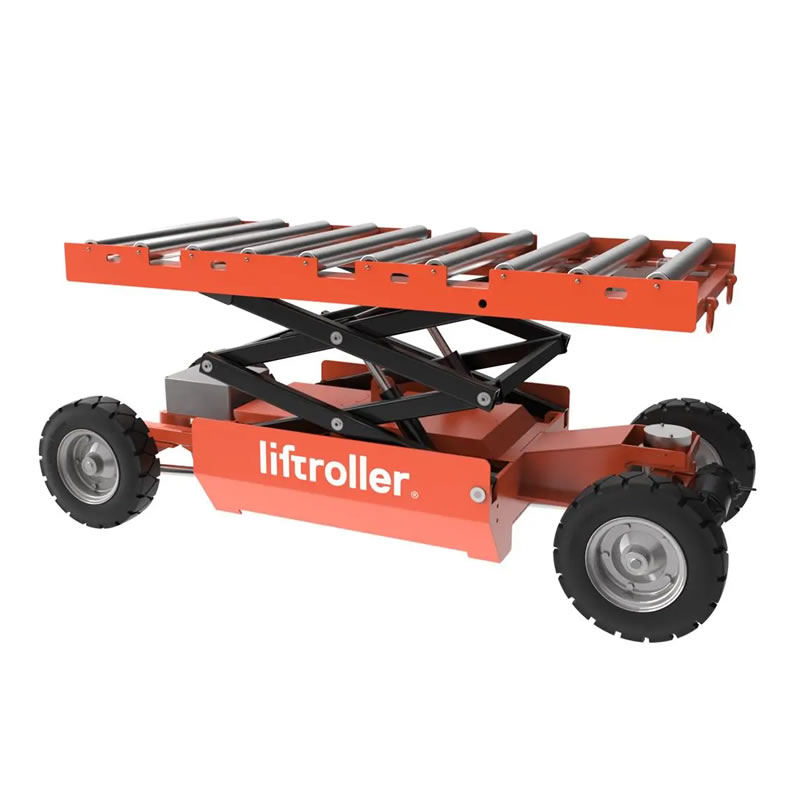 Once the load is inside, the Liftroller E Wagon moves it across the floor plate under remote control instead of by hand.
Weighing up Liftroller for a job?
Leave your details and we'll call you back with pricing and the right system for the load.
What drives the cost of loading platform hire
Suppliers rarely publish rates, because almost nothing about this is a flat weekly price. When you compare quotes, these are the variables that actually move the number.
Hire duration. Weekly rates drop sharply with committed duration. A four week hire and a six month hire on the same equipment are very different rates per week.
Installation and strike. With a fixed deck or a hoist this is often the largest line in the quote and it is easy to miss when you compare a day rate against a day rate. Ask for it separately. A system that two people install in fifteen minutes has effectively no install cost at all.
Crane time. This is the cost that does not appear on the loading platform invoice but dominates the real number. If your landing method makes each crane cycle slower, or requires a crane lift every time you move it up a floor, you are paying for it in crane hours at a much higher rate than the platform itself. We set out the full arithmetic in crane loading platform versus window opening delivery, and break down every line of a quote in what drives the cost of loading platform hire.
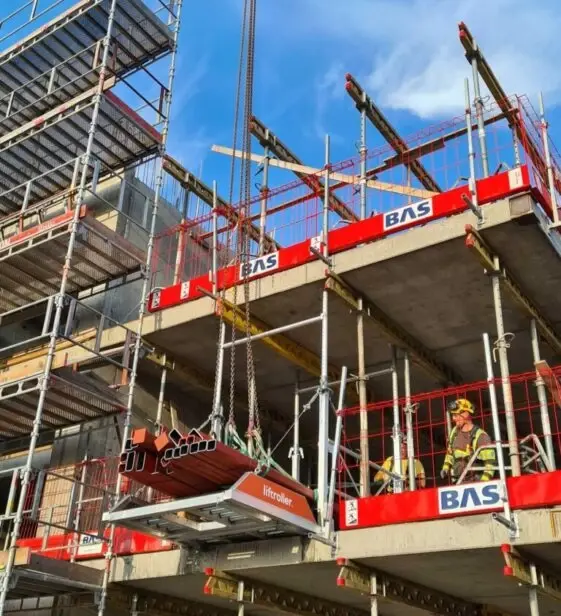 Project Furukrona ran the Liftroller Floor on a new apartment build, landing material on each level as the structure went up.
Number of units. On a tall building you may want a platform on more than one level so trades on different floors are not queuing for the same landing point.
Delivery, engineering and certification. Fixings that need an engineer sign-off, and any temporary works design, add both cost and lead time.
Labour saved. The number worth calculating, and the one that usually decides it. Count the hours currently spent carrying material and compare that with the hours a mechanised method needs. On a large Paris refurbishment covering 450 apartments, the contractor chose the system on exactly that basis. There is a fuller breakdown of the savings logic on our cost savings page.
If you want a comparison for your own job rather than a generic figure, tell us the site and the programme and we will price the setup that fits.
Capacity, setup and what to check before you hire
Before you commit to any method, get clear answers on these.
- Rated capacity, and whether it is a point load or distributed. A platform rated to 1,200 kg distributed will not take 1,200 kg on one corner.
- Opening or bay dimensions. Measure the actual opening. Window sizes on a refurbishment are rarely what the drawings say.
- Certification and compliance documents. You want the technical specification, the load rating and the compliance paperwork before it arrives on site, not after.
- Who installs it. Whether your crew can set it up, or whether it needs the supplier or a licensed installer.
- What it weighs. If your crew has to carry it to another floor, this matters a lot. Anything two people cannot move is effectively fixed.
- Whether a trial is available. Any supplier confident in their product should let you prove it on your own site before you commit to a hire period.
 At Opus XVI the facade was protected, so nothing could be fixed to it. The platform locked into the existing openings instead.
Where each method actually wins
Nobody is well served by pretending one method suits every job.
Use a fixed cantilevered deck on a new build where you are working up floor by floor, you can fix to the slab, you need capacity above 1,200 kg, and the deck will stay on one level for weeks at a time. There is a detailed comparison of decks against opening systems in our post on CantiDeck style platforms versus the Liftroller Floor.
Use a scaffold loading bay when scaffold is already in the programme for the full duration of your material deliveries, and the bay can be designed in from the start rather than retrofitted.
Use a material hoist on tall structures with a long programme and continuous vertical demand, where you have the ground-level footprint and the mast can be tied.
Use a window opening system on fit-outs, refurbishments, heritage buildings, curtain wall towers, and any site where there is no room outside, no permission to fix, or the scaffold is coming down before the material stops arriving. It is also the only one of the four you can move to a different opening on a different floor the same morning.
For a wider view of how the landing method fits into the rest of the programme, our city centre fit-out logistics cheat sheet covers access, permits, hoists and storage together. If you are working in Sydney specifically, we cover local conditions on our loading platform hire in Sydney page and go deeper on city constraints in loading platforms on Sydney sites.
Getting it right on your site
The method that suits your job is usually decided by constraints, not preference. Space outside the building, permission to fix, programme length and how far the material has to travel once it is inside will normally narrow four options down to one.
If you want that worked through for a specific site rather than in the abstract, talk to our Sydney team. We will look at your access, your openings and your delivery schedule, and we offer a free on-site trial so you can prove the method on your own job before committing to a hire period.
Quick answers
Frequently asked questions
It gives a crane a safe, rated place to land material at height so it does not have to be carried up from ground level. Typical loads are plasterboard, steel studs, ceiling grid, flooring, glass, HVAC components and plumbing. The platform sits at the slab edge or in an opening, the crane lands the load, and the material is moved onto the floor from there.
It depends on the type. Fixed cantilevered decks commonly run from 2,000 kg upwards. Mast climbing material hoists typically sit between 300 kg and 2,000 kg depending on the model. Window opening systems such as the Liftroller Wall are rated to 1,200 kg. Always check whether the rating is distributed or a point load, because that changes what you can actually land.
Only for a scaffold loading bay. Fixed cantilevered decks fix to the structure, material hoists run on their own tied mast, and window opening systems lock into an existing opening. If your scaffold is coming down before your material deliveries finish, a method that does not depend on it is worth considering early.
Fixed decks usually take hours and often need crane assistance. Mast climbing hoists take days. Scaffold bays are built as part of the scaffold. A window opening system such as the Liftroller Wall assembles in roughly ten to fifteen minutes without tools, which is why it suits sites where the landing point needs to move.
Not all of them. Fixed decks and hoists need fixing points, which is usually the end of the conversation on a heritage listing or a completed curtain wall. Systems that lock into an existing opening without fixing to the facade are designed for exactly this situation, and leave no making good behind.
A loading platform is a landing point for crane loads, used intermittently as deliveries arrive. A material hoist is a vertical transport machine that runs material up and down continuously on its own mast. They solve different problems. Sites with long programmes and constant vertical demand often use a hoist. Sites with periodic deliveries and limited external space usually do better with a platform.
The crane operator needs the relevant high risk work licence, and mast climbing hoists generally require a licensed operator. Landing platforms themselves do not usually require a specific ticket, but everyone involved needs to be trained in the safe work method statement for the task and the equipment must be used within its rated capacity. Check the current requirements with SafeWork in your state.
Yes, and on short jobs setup time matters more than the weekly rate. A method that takes two days to install and two days to strike can consume most of a six week programme benefit. Systems that install in minutes are usually the better economics on short fit-outs even when the headline rate looks similar.
Talk to our team about Liftroller
Tell us about your loads and access constraints and we'll recommend the right Liftroller setup. No obligation.
Related Articles
Loading Platforms on Sydney Sites: What Works in the CBD and Inner Suburbs
Road approvals, night work limits, heritage facades and the date your crane leaves site decide the landing method on a Sydney job. Here is what works where, from The Rocks to a Surry Hills warehouse conversion.
What Drives the Cost of Loading Platform Hire in Australia
The weekly rate is the smallest part of what you pay. Here is what actually moves a loading platform hire cost, and the six things to ask for so you can compare two quotes properly.
Crane Loading Platform vs Window Opening Delivery: The Real Cost Per Lift
Landing material at height costs crane time, hire time and labour time. Here is the arithmetic for working out your real cost per tonne landed, with a variable driven comparison table you can fill in with your own rates.