Loading Platforms on Sydney Sites: What Works in the CBD and Inner Suburbs
Get a quote for your site
Leave your details and we'll call you back with pricing and the right system for the job.
Most Sydney jobs do not come unstuck on the platform itself. They come unstuck on the approval, the kerb space, or the week the crane leaves site. Sort those three out early and the landing method more or less picks itself.
Here is how the work runs across the CBD and the inner suburbs. If you already need gear on the ground, loading platform hire in Sydney is the page to start with.
Loading platforms in Sydney: what usually decides the method?
Three things, in this order. Can a truck stop where you need it, and for how long. Can you fix anything to the building, or is the facade off limits. Is there a crane, and will it still be there when the fit-out ramps up.
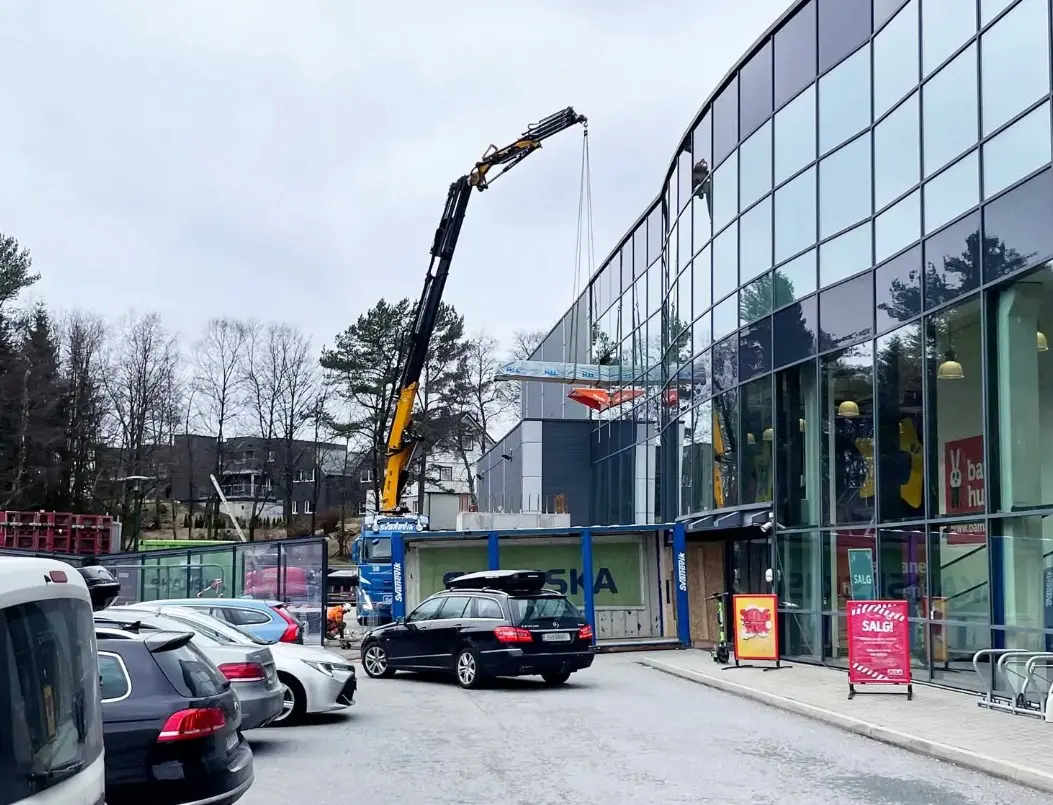
The rest is detail. A cantilevered crane loading platform suits a site with hook time and a clear lift zone. It is a poor answer on a Paddington terrace conversion with no crane and a two metre footpath.
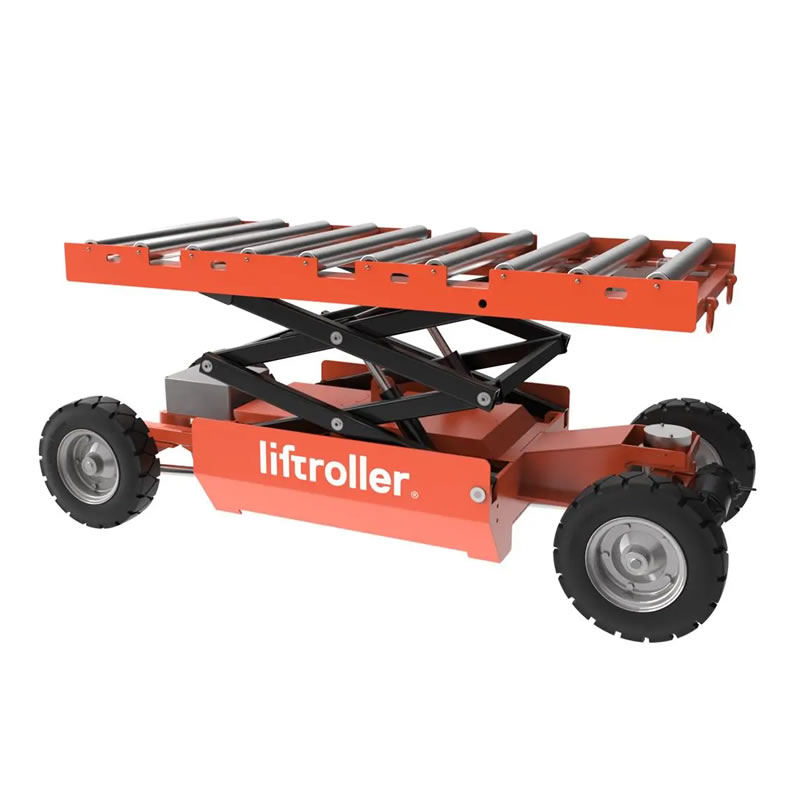 High rise fit-outs in the Sydney CBD usually need the Liftroller E Wagon as much as they need the landing platform itself.
How do City of Sydney approvals change your programme?
City of Sydney controls the road and footpath outside your site. Stand a truck in a traffic lane, close a footpath, put up a hoarding or swing a load over public space and you are into an application. Crane work over a road generally needs a road occupancy approval and a traffic control plan prepared by an accredited person.
What hurts is lead time. These approvals are not same day. Some take weeks, and conditions can come back that change your plan: restricted hours, a smaller occupancy area, or a requirement to keep pedestrians moving. Lodge early and confirm current requirements with the council, because conditions differ street by street.
The fewer times you need the road, the fewer approvals you carry.
What do night work and noise limits do to a delivery programme?
Out of hours work is controlled through your development consent conditions and NSW noise guidance, and residential neighbours drive the outcome. Broadly, standard construction hours cover the working week, Saturday hours are tighter, and Sunday work needs approval. Out of hours deliveries do get approved in the CBD where daytime work would be unsafe or block traffic, but they carry noise conditions.
Night work solves access and creates two new problems. The window is short, and anything that bangs, beeps or reverses becomes a complaint.
Electric plant helps. An electric material transport wagon with remote control moves up to 1,200 kg quietly and puts no exhaust into a basement. A powered stacker does the pallet work without the noise. Confirm your approved hours with the council and SafeWork NSW before you plan a night programme.
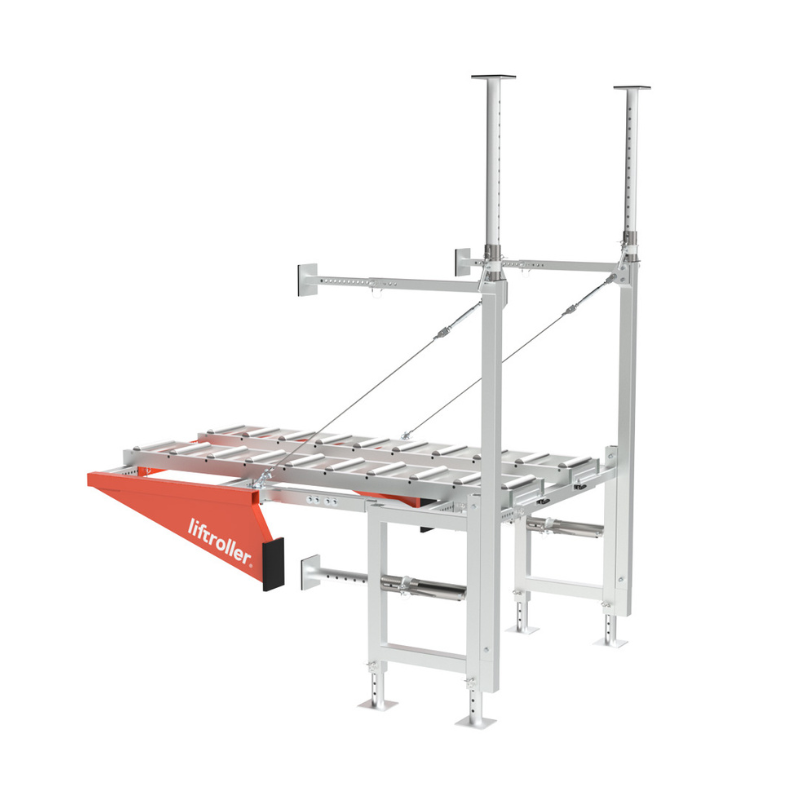 On a confined Sydney block the Liftroller Wall works entirely inside the slab edge, so no footpath or road occupancy permit is involved.
Why are heritage sites different?
In The Rocks, Millers Point, Surry Hills, Paddington and Glebe you are often on a listed building or inside a heritage conservation area. The condition is usually simple. Do not fix anything to the facade, and do not leave a mark. That rules out needle beams through windows, anchored platforms and facade fixed brackets, because all of them need penetrations someone has to approve, make good and sign off.
A non invasive method earns its place here. The Liftroller Wall locks into an existing window or facade opening, carries up to 1,200 kg, and assembles in roughly 10 to 15 minutes without tools. The patented lock leaves no facade damage, and it needs no scaffold and no external space. The same approach ran on a hotel remodelling behind a protected facade.
Weighing up Liftroller for a job?
Leave your details and we'll call you back with pricing and the right system for the load.
How do you load on a narrow one way street?
Half the inner city is one way and barely wide enough for a truck and a parked car. Think the lanes behind Clarence and Kent, and most of Millers Point and Woolloomooloo. You get one truck at a time and nowhere to turn around.
- Book delivery slots and hold trades to them. Two trucks arriving together blocks the street.
- Unload straight into the building. Double handling on the footpath eats standing time.
- Keep the plant small. A material transport system for multi-storey buildings moves loads across a slab without a forklift path.
Corner sites are harder, not easier. With traffic on two or three sides you will usually be told which frontage you can occupy. Pick your loading face early, then design the internal route from there. Our city centre fit-out logistics cheat sheet covers the sequencing.
What happens when the crane comes down before the fit-out finishes?
This is the most common gap on Sydney high-rise, residential and commercial alike. The crane comes off once the structure and facade are done. The fit-out then runs for months with no crane, one or two goods lifts, and a lot of plasterboard, glass, joinery and services still to get upstairs.
Goods lifts become the bottleneck. They are slow, shared with every trade, and a full sheet of plasterboard often will not fit.
Keep a facade opening working instead. A mobile platform that locks into an existing opening lets a telehandler or truck crane land a pallet on the level that needs it, with no scaffold and no second crane hire. Pair it with floor level transport and the goods lift comes off the critical path. For options on a specific building, Sydney loading platform hire is the quickest way to a straight answer.
How do you work in older CBD office stock?
A large share of current Sydney construction logistics work is refurbishment and adaptive reuse: 1970s and 1980s towers around Pitt, Castlereagh and York being stripped back and re-let, plus warehouse conversions through Surry Hills, Chippendale and Alexandria.
Old stock brings small lift cars, low door heights, slab limits that were never set for pallets of tile or stone, occupied floors above and below, and facades that are either listed or too fragile to fix to. Get a structural engineer to confirm slab capacity before you plan a point load, then pick plant that spreads the load and does not need a run up. Battery gear is usually the right call indoors.
 Heritage conditions like those at Opus XVI are common across The Rocks, Millers Point and Paddington.
Which Sydney site type suits which method?
| Sydney site type | The constraint that usually decides the landing method |
|---|---|
| CBD core and shell, crane still standing | Hook time and a clear lift zone over public space |
| CBD fit-out after crane removal | An existing facade opening, or goods lift capacity |
| Heritage or listed building (The Rocks, Paddington) | No fixing to the facade, so the platform must be non invasive |
| Narrow one way street (Millers Point, Woolloomooloo) | Kerbside occupancy and truck standing time |
| Corner site with traffic on two or more sides | Traffic control plan and which frontage you may occupy |
| High-rise residential fit-out over occupied levels | Approved work hours, noise conditions and lift bookings |
Where should you start?
Work backwards from the constraint, not from the gear. Confirm your approvals and their lead times, your approved work hours, and the date the crane leaves. Then choose the method that survives all three.
We are based in Hillsdale and cover Sydney metro, and there is a free on site trial so you can watch the method work on your own building first. Call 1300 222 300 or send us your site details and you will get an answer the same business day on weekdays. For platform types and how to choose between them, read our guide to loading platform hire in Australia.
Quick answers
Frequently asked questions
It depends on where the load travels. If everything stays inside your site boundary and nothing overhangs the footpath or road, you may not need a road related approval. Occupy a traffic lane, close a footpath, erect a hoarding or swing a load over public space and you are into an application plus a traffic control plan. Confirm the current position with City of Sydney.
Allow weeks, not days, and treat it as a programme item. Assessment times vary with the type of occupancy, the street and the level of disruption. Conditions can come back different from what you asked for, which may force a change of method. Lodge early and favour a method that needs the road rarely.
Often yes, provided nothing fixes to or damages the facade. That is what rules out needle beams and anchored brackets on most listed buildings. A mobile platform that locks into an existing window or facade opening avoids penetrations entirely, and the patented lock on the Liftroller Wall leaves no facade damage. Check your consent and any heritage approvals for the building first.
Keep a facade opening working. A mobile loading platform that locks into an existing opening lets a telehandler or truck crane land pallets on the level that needs them, without scaffold and without hiring a second crane. It carries up to 1,200 kg and goes in and out in roughly 10 to 15 minutes without tools, so it can move between openings and levels as the fit-out progresses.
Yes, where the work hours are approved. Out of hours deliveries are common in the CBD because daytime road occupancy is harder to get. The limits are noise conditions and neighbour notification, not the platform. Electric plant matters here: quiet, no exhaust, no reversing alarm at two in the morning outside an apartment. Confirm your hours with the council and SafeWork NSW.
Yes. We are in Hillsdale in Sydney's eastern suburbs and service Sydney metro, which covers the CBD, the inner west and the industrial areas near the airport. Send the address, building type, access constraints and your dates. Call 1300 222 300 or use the contact form and you will hear back the same business day on weekdays.
Talk to our team about Liftroller
Tell us about your loads and access constraints and we'll recommend the right Liftroller setup. No obligation.
Related Articles
Loading Platform Hire in Australia: Types, Costs and How to Choose
The four ways to land material at height in Australia, what separates them, what actually drives the hire cost, and how to work out which one belongs on your site.
What Drives the Cost of Loading Platform Hire in Australia
The weekly rate is the smallest part of what you pay. Here is what actually moves a loading platform hire cost, and the six things to ask for so you can compare two quotes properly.
Crane Loading Platform vs Window Opening Delivery: The Real Cost Per Lift
Landing material at height costs crane time, hire time and labour time. Here is the arithmetic for working out your real cost per tonne landed, with a variable driven comparison table you can fill in with your own rates.