What Drives the Cost of Loading Platform Hire in Australia

Get a quote for your site
Leave your details and we'll call you back with pricing and the right system for the job.
Most suppliers will not put a loading platform hire cost on their website, and that is not a dodge. The weekly rate is only one line in what you end up paying, and on a lot of jobs it is not the biggest line. Install and strike, crane hours, the number of landing points your trades need and the carrying labour you stop paying for will move the total far more than the rate itself.
So the useful question is not what it costs per week. It is what you are actually comparing. Two quotes that look almost identical on the hire rate can land a long way apart once the crane and the install crew are counted. Here is how to read them.
Why do suppliers keep rates off the website?
Because the same platform on two sites is two different jobs. A tower with a clear facade opening on every floor is not the same job as a tight inner west conversion with one crane window a week. A single published number would be wrong for nearly everyone who read it.
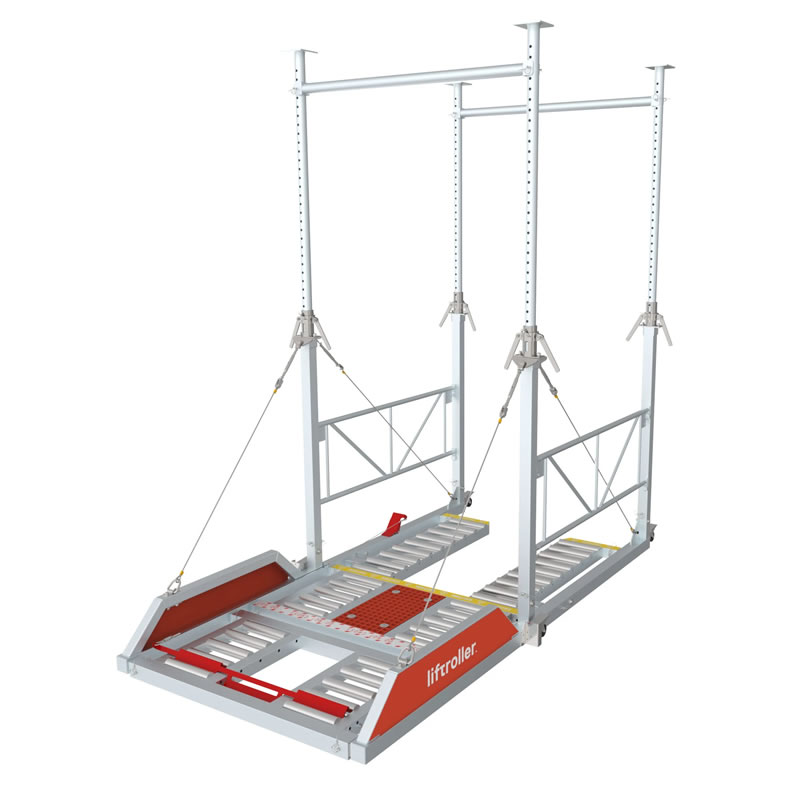 Install and strike is a real line in any quote. The Liftroller Floor is set up by the crew rather than by a crane.
If you want the background on equipment types before you price anything, start with our guide to loading platform hire in Australia, the types, costs and how to choose, then come back here.
What actually moves the number?
How long do you need it?
Duration is the first lever. Weekly rates drop as the committed term goes up, so a platform held for the whole fitout costs less per week than one taken for a fortnight. The trap runs the other way. A short hire that gets extended twice usually costs more than committing up front, because you pay short book pricing and then pay again in admin and disruption when the programme slips.
Before you ask anyone for a rate, work out the realistic window. Not the programme date. The date your trades will actually stop landing material.
Who installs it, and who strikes it?
This is the line most people miss. On a fixed deck or a material hoist hire, installation and strike is often the largest single cost in the package, and none of it shows up in a day rate.
That is where mobile units separate from fixed decks. The Liftroller Wall locks into an existing window or facade opening and assembles in roughly 10 to 15 minutes without tools, rated to 1,200 kg, and the patented lock leaves no facade damage to make good. When install is measured in minutes by your own crew instead of days by a specialist crew, that whole line falls out of the comparison.
How much crane time will it eat?
Crane hours never appear on the platform invoice, and they usually dominate the real number. If your landing method needs the crane to place the deck, lift it up a floor, and take it off again, you pay for that time at crane rates. You also pay for whatever else could not use the crane.
Ask every supplier what their solution does to your crane schedule. A platform two workers can reposition between openings takes the bottleneck off the critical path.
How many units do you actually need?
One landing point sounds cheap until three trades on three floors queue for it. If your programme has several floors in fitout at once, price two or three units against the hours lost to queuing rather than against each other.
The same logic applies once material is on the slab. Moving a pallet from the landing point to the far apartment is its own problem, which is what the Liftroller E Wagon and the Liftroller Floor system are for.
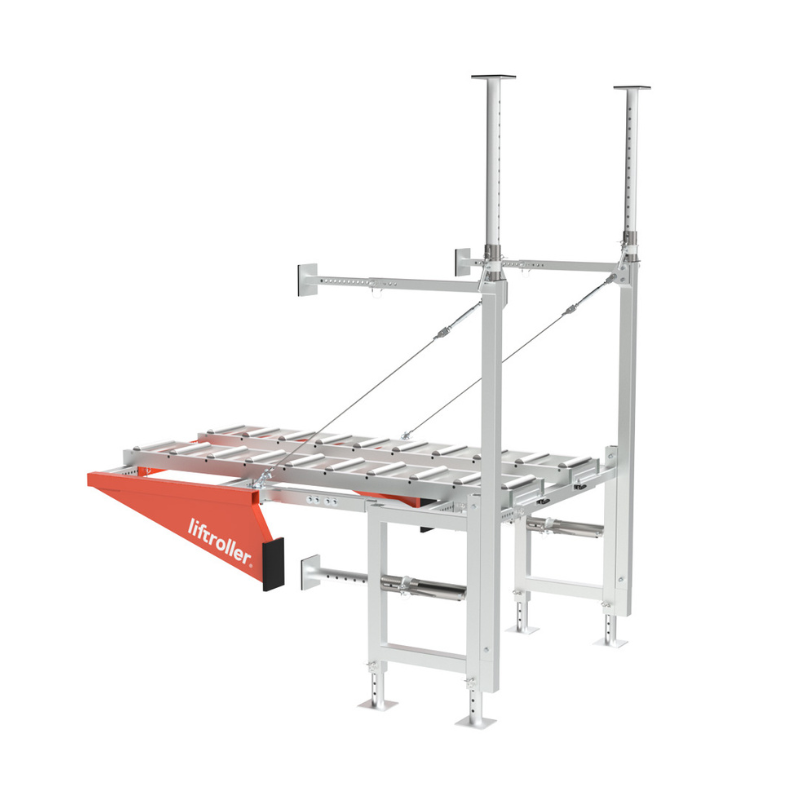 The Liftroller Wall assembles without tools in about ten to fifteen minutes, so there is effectively no installation line to compare.
What about delivery, engineering and temporary works?
Anything that ties into the structure or hangs off a slab edge will usually need engineering sign off, and larger systems may need a temporary works design. Both cost money. Both also cost time, which matters more, because a design that takes weeks to certify can hold up a floor.
Ask early whether the item needs a project specific design or comes with generic certification. That one answer changes your lead time.
How hard is your site to get into?
Transport and access are simple to price and easy to forget. A CBD job with a night delivery window, a lift with a weight limit, or a basement with low headroom all add cost. Weight matters too. Kit two workers can carry through a doorway avoids the trouble a crane lift creates.
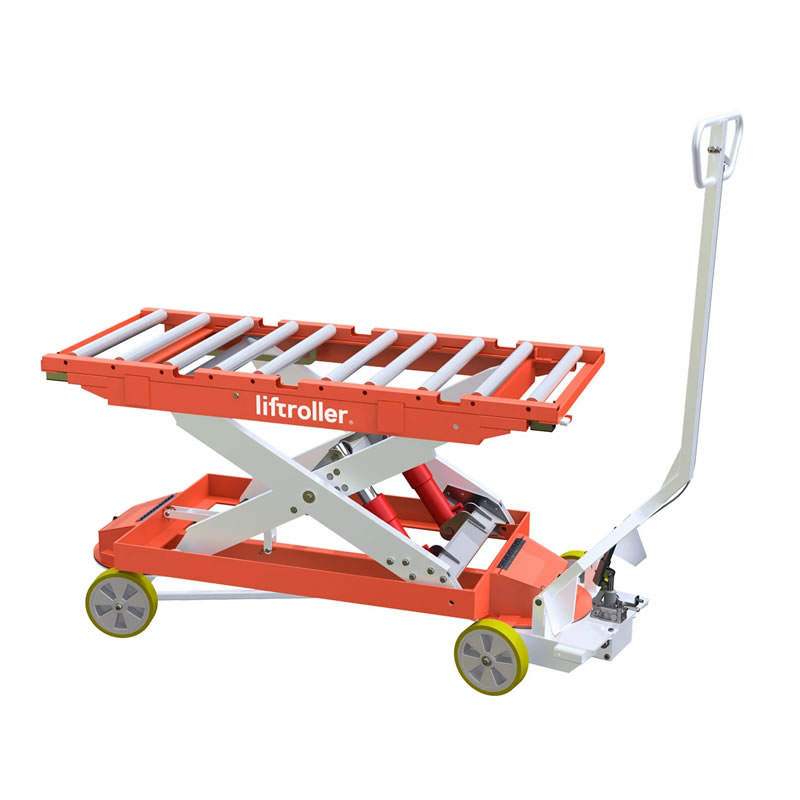 Labour after the landing is the cost most quotes ignore. A Liftroller Wagon turns a four person carry into a push.
How many labour hours does it save?
This is the number that usually decides it. Count the hours your trades spend carrying material by hand or standing at a landing point, then price those hours and compare them against the hire. On most multi storey fitouts the labour saved is larger than everything else on this list put together, which is why the cheapest weekly rate is so often the wrong pick. The arithmetic is set out in more detail on our cost savings page.
Weighing up Liftroller for a job?
Leave your details and we'll call you back with pricing and the right system for the load.
Which cost driver hits which method hardest?
| Cost driver | Fixed loading deck | Material hoist | Mobile platform |
|---|---|---|---|
| Install and strike | High | Highest | Minimal |
| Crane time | High, on every move | Setup and dismantle | None to reposition |
| Engineering sign off | Usually required | Usually required | Often generic |
| Weekly hire rate | Moderate | Higher | Lower |
| Adding extra units | Expensive | Rarely practical | Straightforward |
| Programme extension risk | High | High | Low |
What should you ask for in a quote?
Ask for these six things and you can compare like for like.
- Is install and strike itemised separately from the hire rate, or buried inside it?
- Is the rating a distributed load or a point load, and at what capacity? A capacity figure on its own tells you nothing.
- Who installs it: your crew, or a specialist crew you are paying for?
- What does the unit weigh, and can it be moved without a crane?
- What happens if the programme extends? Is there a rollover rate, or does the whole thing reprice?
- Is a trial available on your actual site before you commit?
Get a number for your own site
Once you know your term, your floors, your crane situation and your access, a quote takes very little time to put together. Tell us the building and the programme and we will price the units and the install, including the parts other quotes leave out.
Have a look at loading platform hire in Sydney, then get in touch for a quote or call 1300 222 300. We are Hillsdale based and the on site trial is free.
Quick answers
Frequently asked questions
There is no single figure, and any supplier quoting one before seeing your site is guessing. The weekly rate depends on the unit, the capacity, the committed term and how many you take. More to the point, the weekly rate is not the total. Install, strike, crane time and transport sit outside it on most systems. Get all of those itemised before you compare anything.
Sometimes on the weekly rate, rarely on the total. A hoist carries a heavy install and dismantle cost, needs engineering, and takes days to stand up and take down. It earns its keep on tall buildings with high volumes running for months. For fitout work across a handful of floors, a mobile platform usually lands cheaper once setup is counted.
A retractable loading platform slides back inside the slab edge when it is not in use, so the crane can work past it and the facade can be closed up around it. That retraction is useful on tight sites, but it comes with structural fixings and engineering, so treat it as a fixed system for costing purposes. Compare it on install and crane time, not on the hire rate alone.
Often not, and this is where two quotes stop being comparable. Ask directly whether install and strike sit inside the rate, are quoted separately, or are excluded entirely and left to you. Then ask who supplies the labour. A rate that looks lower because the install crew is not in it will cost you more once your own crew or a subcontractor picks up the work.
Yes. A free on site trial is available across Sydney, and it is the fastest way to settle an argument about fit. You find out in an hour whether the unit suits your openings, whether your crew can install it, and how many landing points you actually need. Take the trial before you sign anything longer than a month.
Work backwards from your heaviest regular load, not your heaviest possible load, then check how that load is presented. A pallet of tiles on a jack is a very different case from the same weight spread across a deck. Ask whether the rating is distributed or a point load. A Liftroller Stacker or similar handling gear on the slab also changes what has to cross the platform at once.
Talk to our team about Liftroller
Tell us about your loads and access constraints and we'll recommend the right Liftroller setup. No obligation.
Related Articles
Loading Platform Hire in Australia: Types, Costs and How to Choose
The four ways to land material at height in Australia, what separates them, what actually drives the hire cost, and how to work out which one belongs on your site.
Loading Platforms on Sydney Sites: What Works in the CBD and Inner Suburbs
Road approvals, night work limits, heritage facades and the date your crane leaves site decide the landing method on a Sydney job. Here is what works where, from The Rocks to a Surry Hills warehouse conversion.
Crane Loading Platform vs Window Opening Delivery: The Real Cost Per Lift
Landing material at height costs crane time, hire time and labour time. Here is the arithmetic for working out your real cost per tonne landed, with a variable driven comparison table you can fill in with your own rates.