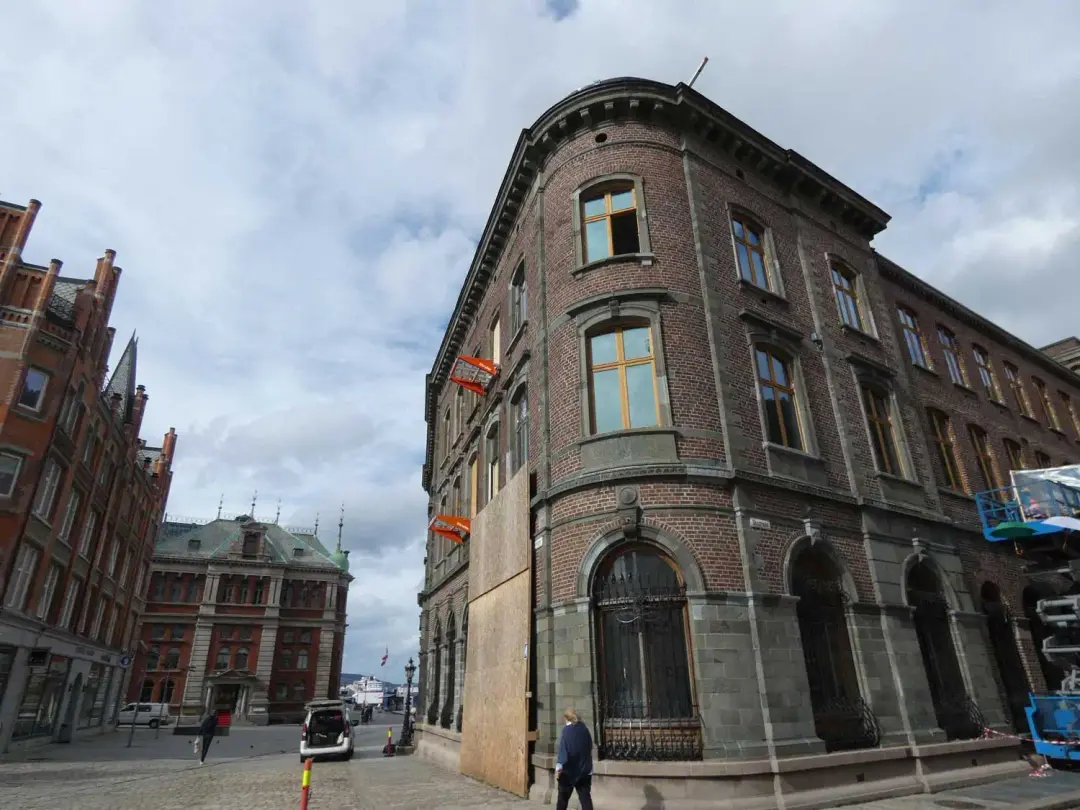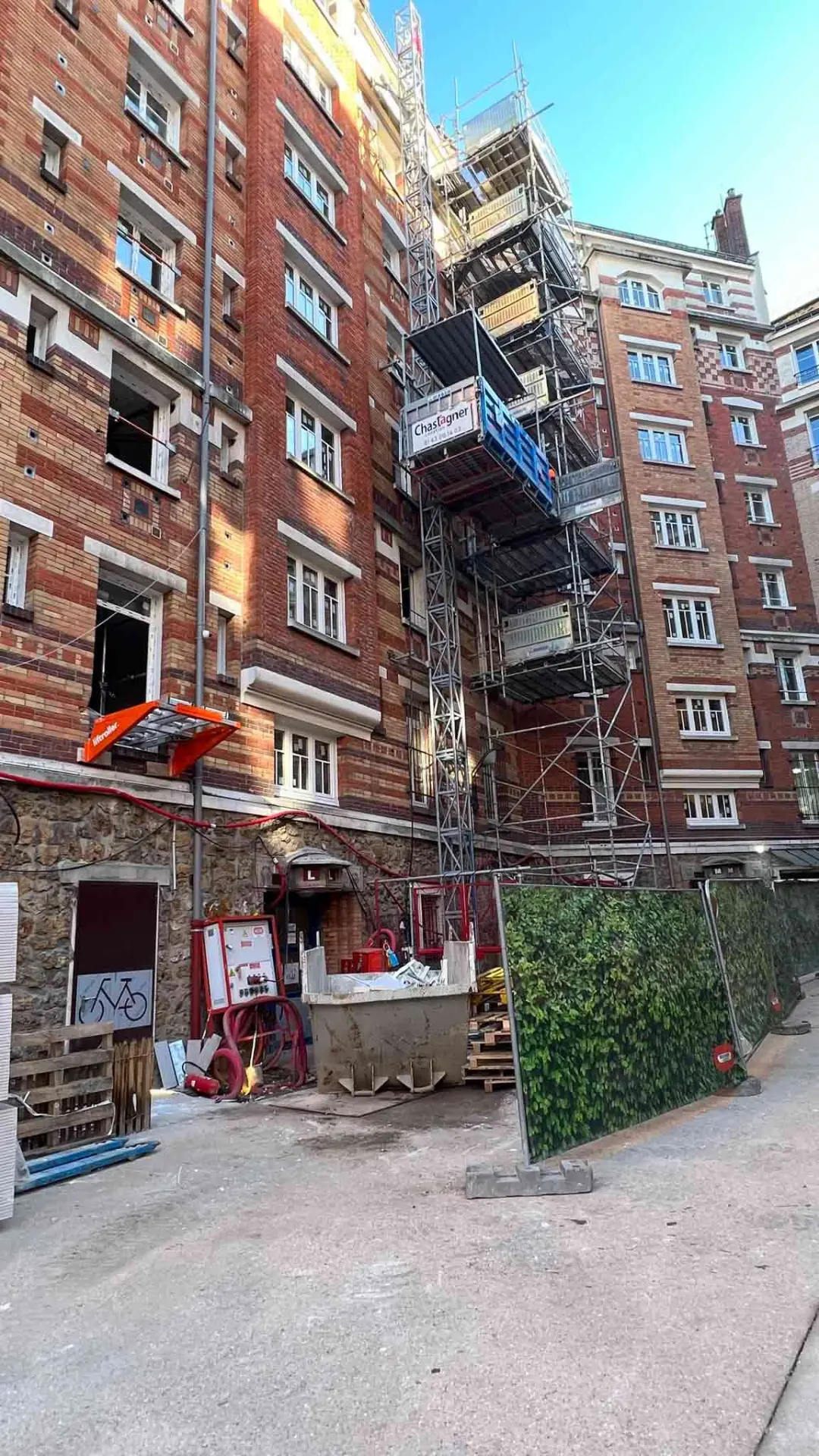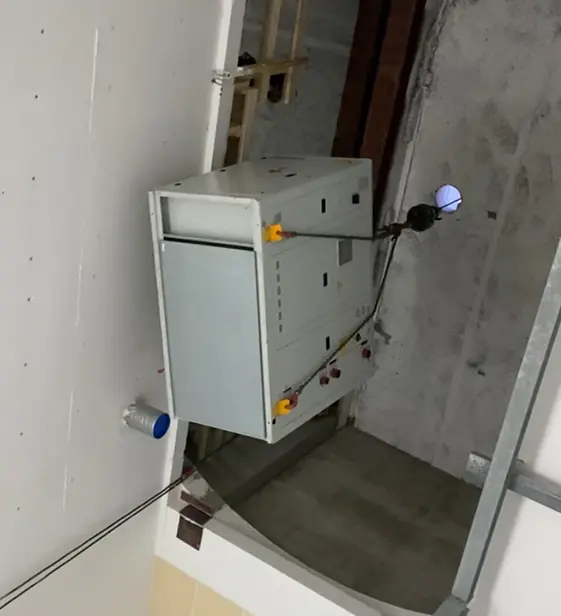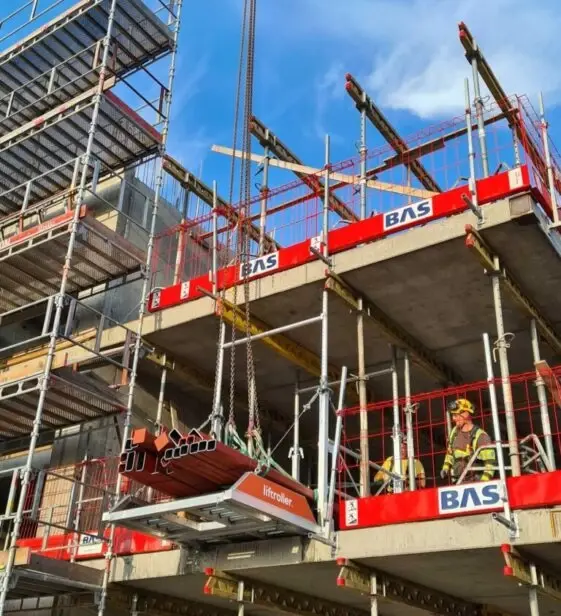
Backe Ostfold built the Furukrona apartments using Liftroller Floor to get materials onto each level. Instead of landing everything in the yard and moving it up later, the roller line lets a crane load come off the hook at the floor where it is going to be used.
The site
New apartment work is repetitive by nature, and that is the thing to plan around. The same packs of board, framing, insulation, fixtures and services go to every level, floor after floor, so the handling method gets used hundreds of times before the job is done. Anything awkward in it compounds.
Height is the obvious constraint. Once you are past the first level or two, nothing goes up by hand, so you are choosing between a hoist, a crane and a stair carry. A hoist gives you one route for the whole site and everyone lines up for it. A crane on its own only gets material to the edge, and something still has to move it from the edge to the room.
There is also the state of the floor. On a new build the slab is clear but the perimeter is not always closed, so the landing point has to be safe and repeatable rather than improvised each time.
What they used
Liftroller Floor is a lightweight roller system for multi storey buildings. It forms a roller line between the outside and the inside, so the crane load rolls onto the slab under control rather than being swung in and set down for someone to break out by hand.
The rest of the run is handled by the same family of gear. The Liftroller Table gives an adjustable roller surface for horizontal transport across the floor plate, the Liftroller Stacker raises pallets so material is worked at bench height instead of off the deck, and the E Wagon moves up to 1,200 kg on remote control for the longer runs. Where a facade opening is the only way in, the Liftroller Wall platform locks into it and takes the same load rating.
How it worked on site
The line is laid at the floor edge, the crane brings the pack across, and it rolls in. From there it goes to the room on rollers or on a wagon. The material is touched fewer times, and the times it is touched are pushes along a level surface rather than lifts.
Because the components are light, the crew sets the line up and moves it themselves without waiting on anyone. On a repeat build that is what keeps it in use, since a method that needs booking in advance quietly stops getting used by the second or third floor.
What it changed
Backe Ostfold got faster material transport, less physical strain on the crews and better progress through the build. The source detail here is limited, so the honest version is the mechanism rather than a figure: fewer handling steps per pack, on a job with a lot of packs.
If you are pricing a multi storey residential job in Sydney and working out how material gets to level six, our guide to material lifting equipment on construction sites walks through the options, and you can talk to our Sydney team about a free trial on your own slab.