Material Lifting Equipment for Construction Sites: An Australian Guide
Get a quote for your site
Leave your details and we'll call you back with pricing and the right system for the job.
Material lifting equipment covers everything that moves material from the back of a truck to the point of fix. On an Australian fit-out or refurbishment you are really solving four separate problems: landing a crane load at height, moving material up and down between levels, shifting it across the floor plate, and lifting it into position at the wall or ceiling. Different gear solves each problem, and gear that is excellent at one job is usually useless at the other three.
Most sites spend heavily on the first two problems and almost nothing on the third. That is where the labour hours quietly disappear. If you want the detail on the landing side, read our guide to loading platform hire in Australia first, then come back here for everything that happens after the load hits the floor.
What are the four types of material lifting equipment?
Sort the gear by the job it does, not by the badge on the side. The buying decision gets simpler and you stop paying twice for the same capability.
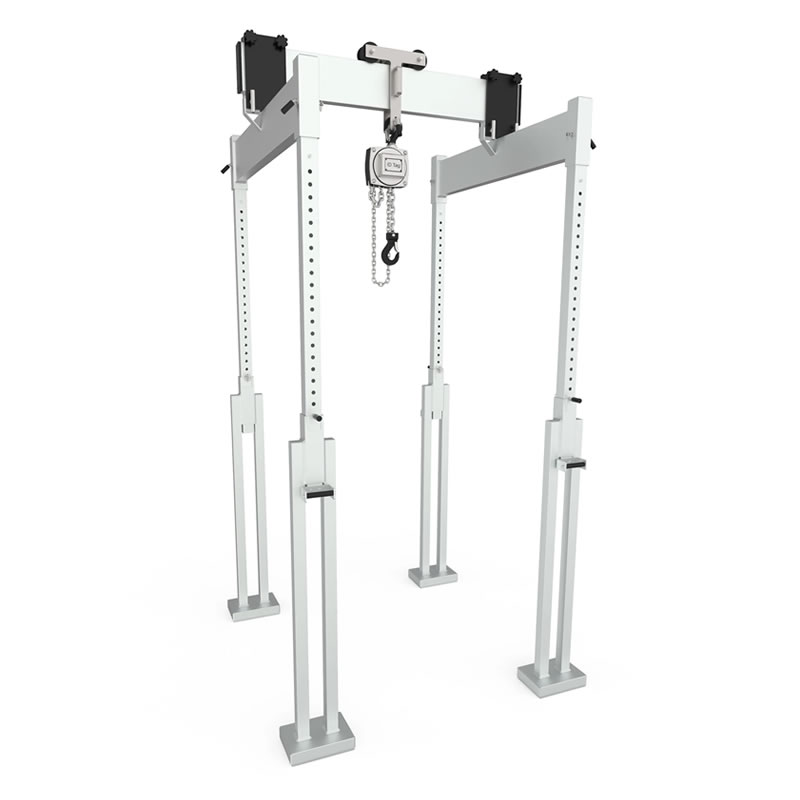 The Liftroller Crane covers point lifting and positioning on site where bringing in a mobile crane is not warranted.
| Category | What it does | Typical rated load | Who moves the gear | Where it fits in the programme |
|---|---|---|---|---|
| Landing at height | Takes the load off the crane hook and onto the working floor | 1,000 kg to 3,000 kg | Crane, or a two person crew for mobile types | Structure through to early fit-out |
| Vertical transport | Moves material between levels once the crane has gone | 200 kg to 1,500 kg | Fixed to the structure, or wheeled | The whole programme |
| Horizontal transport | Moves material across the floor plate to the point of fix | 300 kg to 1,200 kg | The crew, dozens of times a day | Peak fit-out and fix out |
| Point lifting | Lifts and holds material while it is fixed | 100 kg to 700 kg | One person | Fix out, services, ceilings |
Read across that table before you price anything. Most programmes buy a landing solution and a hoist, then hand the crew a builders trolley for the last 40 metres. That last 40 metres is the expensive part.
How do you land a crane load at height?
Landing at height is the handover point between the crane and the building. You have three realistic options in Australia.
Fixed cantilevered decks bolt or prop to the slab and cantilever past the facade. They carry the most weight and suit a structure job where the facade is not yet on. The catch: they need a crane to install and to move, and they occupy a slab edge the facade crew will want back.
Scaffold loading bays are built into the scaffold and limited by its design. Cheap if the scaffold is already there, slow if it is not, and any change means a scaffolder and a delay.
Window opening systems are the newer approach for refurbishment and fit-out. A mobile loading platform locks into an existing window or facade opening and cantilevers out from there. The Liftroller Wall is rated to 1,200 kg, assembles in roughly 10 to 15 minutes without tools, and leaves the facade undamaged because it clamps into the opening rather than fixing through the building. On a live refurbishment where you cannot touch the facade and cannot get a crane back, that is often the only workable answer. Our loading platform hire in Sydney page covers the setups we run most.
Distributed or point load: which rating actually applies?
This one catches people out. A 1,200 kg rating is normally distributed across the whole deck. A single pallet of tile adhesive parked on one corner is a point load, and that number is lower. Ask which figure is on the plate, get the engineering drawing, and make sure the SWMS matches what the crew will actually load. Check who signs off the installation, and whether that sign off is renewed when you move the platform to another opening.
What moves material up and down between levels?
Once the crane is off the job, everything vertical is on you. Mast climbing material hoists and goods hoists are the heavy end: fixed to the structure, running the full height, the right call on a tower feeding many levels for many months. They need an approved base, an exclusion zone at every landing and a licensed operator. Builders lifts and passenger and materials hoists do the same job but carry people, which changes the licensing and inspection regime.
At the lighter end, a high-lift stacker like the Liftroller Stacker is a powered pallet jack that raises and lowers under power. It will not take material between floors on its own, but it loads and unloads the hoist, lifts pallets onto benches and racking, and takes the deadlift out of jobs the crew would otherwise do by hand. For multi-storey buildings where a full hoist is not justified, the Liftroller Floor system gives you a lightweight material transport setup that works with the building you already have.
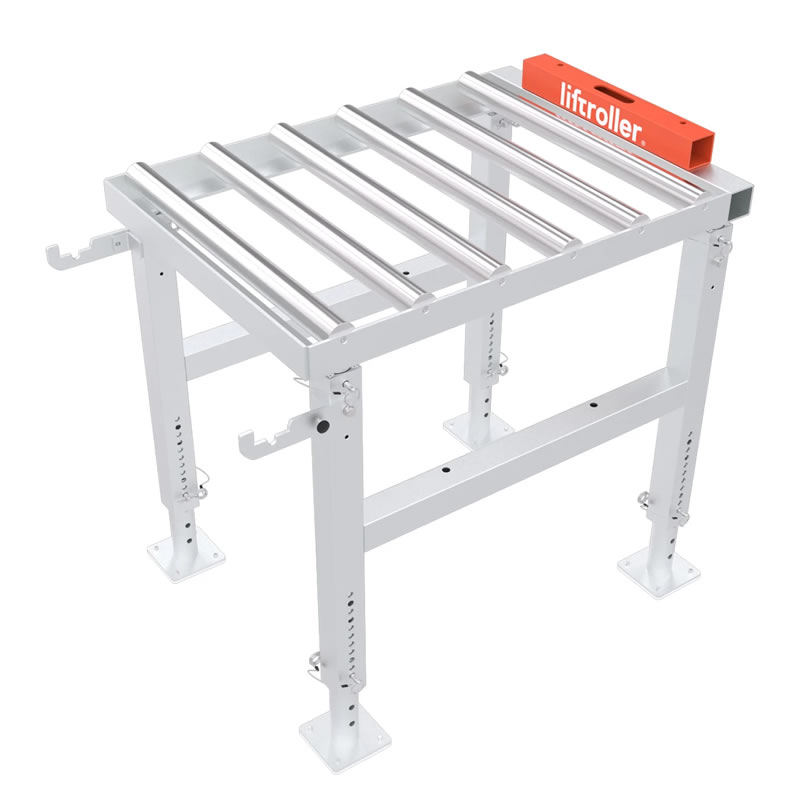 The Liftroller Table extends the roller line horizontally so material keeps moving without ever being lifted again.
What to check: rated capacity, the power supply available at that stage (three phase is not always there), the licensing class your operators hold, and the site perimeter footprint the hoist takes for its whole time on the job.
Weighing up Liftroller for a job?
Leave your details and we'll call you back with pricing and the right system for the load.
Why does horizontal transport cost more than you think?
Here is the argument most guides skip. Sites spend serious money getting material into the building and almost nothing on moving it once it is there. The crane hire, the loading platform, the hoist: all budgeted, all on the programme. The 40 metre push from the hoist landing to the far corner of the floor plate: not budgeted, not on the programme, and repeated fifty or sixty times a day by two people who are paid to be tradespeople.
Add it up on a single level. If a crew makes 50 trips a day and each round trip takes four minutes, that is over three hours of labour a day spent walking material across a slab. Across a twelve level refurbishment that is not a rounding error, it is a line item.
The safety side is worse. Body stressing is consistently the largest single cause of serious workers compensation claims in Australian construction, and most of it comes from repetitive carrying, pushing and awkward lifting rather than from one dramatic incident. The hoist is the part everyone watches. The floor plate is where people actually get hurt.
Mechanical handling equipment at floor level fixes both problems at once. An electric material wagon with remote control carries up to 1,200 kg and lets one person walk beside the load instead of behind it. A compact electric material mover with adjustable height suits tighter floor plates and lower door heights. An adjustable roller table moves long or awkward material horizontally without anyone taking the full weight. Where power is not needed, a manual material wagon is still a big step up on a flat trolley because the load sits properly and the crew is not fighting it.
What should you check before you choose floor level gear?
- Capacity, and whether it is distributed across the deck or concentrated
- The weight of the unit itself, because the crew has to get it into the building and into the lift car
- Footprint against your tightest door opening and your smallest lift car
- Power source: battery run time and where it charges overnight
- Turning circle on a floor plate full of stud walls
- Deck height against pallet height, so loading does not become another manual lift
You can see how this plays out in practice on real jobs. Everquip bought the Liftroller E Wagon for steel handling and 8Build trialled the E Mover on a Waterloo refurbishment. If you want to test the numbers on your own floor plate before committing, get in touch for a free on-site trial and run it with your own crew and your own material.
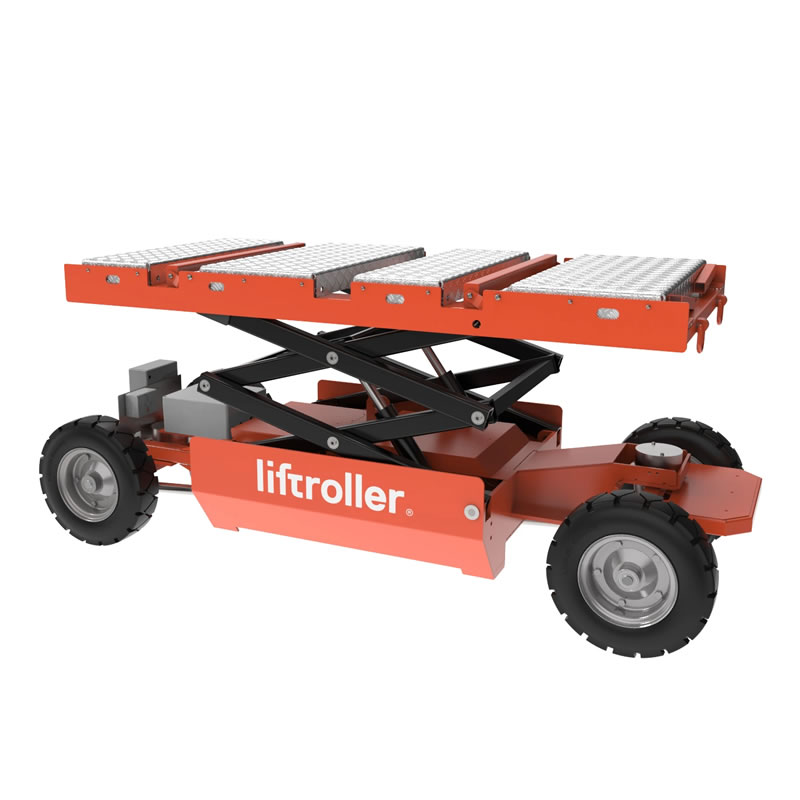 The Liftroller E Mover handles the across the floor leg, which is where most of the hidden labour on a fit-out sits.
What handles point lifting and positioning?
The last few metres are their own problem. Here you are not moving material, you are holding it still while someone fixes it.
A portable lifting crane covers loads too heavy to lift by hand but too small to justify bringing plant in: motors, tanks and awkward one-off lifts in plant rooms. Check the rated capacity at full reach rather than the headline number, plus counterweight and floor loading where it sits.
Panel lifters do the same for sheet material. Trestles carry the person rather than the material, and trestle weight matters more than people expect because the crew moves it constantly. The Liftroller Trestle weighs 5.8 kg and takes 700 kg, so one person repositions it one handed instead of dragging a steel A-frame around.
Manual handling equipment like this is the cheapest safety spend on the job.
Should you hire or buy material lifting devices?
There are no fixed rules, but the cost drivers are predictable.
Hire suits a short need, gear that is specific to one stage of one job, or proving the workflow before you commit. Material handling equipment hire also puts maintenance, compliance and replacement on the supplier rather than on your yard.
Buying suits high utilisation across concurrent jobs, somewhere to store and charge the gear between projects, and crews who use it often enough to get quick with it. Break even is driven by utilisation, transport between sites, storage and maintenance.
For a structured view of where the savings actually land, see our cost savings breakdown and the overview of how the Liftroller system works.
How does this fit an Australian fit-out programme?
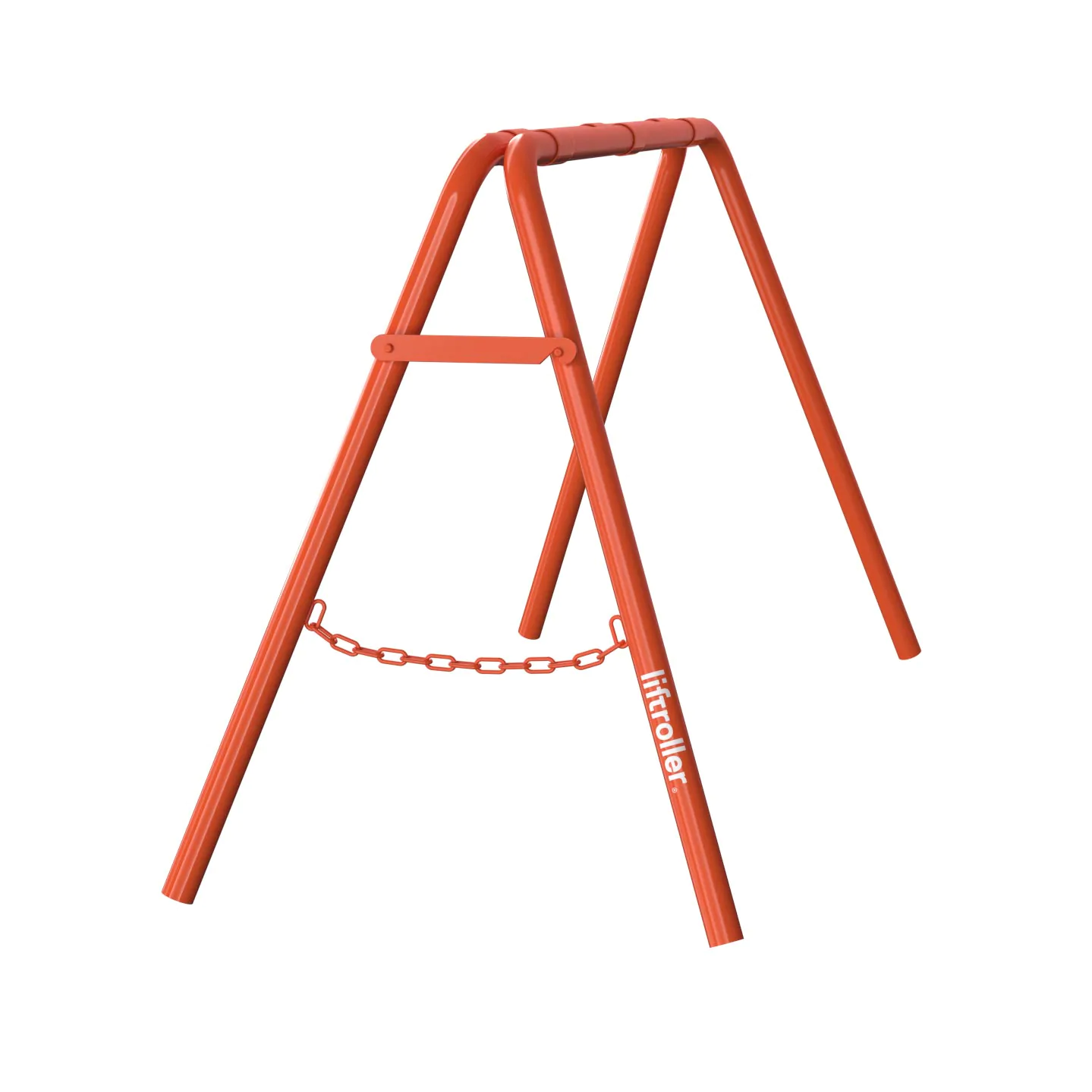 At 5.8 kg with a 700 kg capacity, the Liftroller Trestle is the lightest item in the range and the easiest to reposition.
Early works and structure: crane plus fixed decks or scaffold bays, heavy and infrequent loads.
Facade on, crane gone: where refurbishment programmes usually stall. A mobile loading platform through a window opening keeps material flowing without a crane return.
Peak fit-out: volume moves from vertical to horizontal. Plasterboard, framing, services and ceilings all arrive as pallets that travel across the slab. See our approach to plasterboard and Gyprock handling, steel beam handling and suspended ceilings.
Fix out: point lifting gear and trestles, small loads, constant repositioning.
Where to start
Pick the problem costing you the most, not the one that is most visible. If material is stuck on the ground because the crane has gone, look at a mobile loading platform. If it lands fine but takes hours to reach the point of fix, start with floor level transport.
Our FAQs page covers setup and compliance. When you are ready to size something, contact the team with your floor plate, your access and the material you are moving.
Quick answers
Frequently asked questions
They overlap. Material lifting equipment is the subset that raises or lowers a load: hoists, cranes, stackers, loading platforms. Material handling equipment is the wider term and takes in horizontal gear too, such as wagons, movers and roller tables. The distinction matters when you write a SWMS, because lifting gear usually carries inspection and licensing obligations that horizontal gear does not.
It depends on the class of plant. High risk work licences apply to materials hoists, personnel and materials hoists, forklifts and most cranes, with classes set by your state regulator. Battery powered wagons, movers, pallet jacks, roller tables and trestles generally do not, but they still need documented training, a SWMS and pre-start checks. Confirm with SafeWork NSW or your state equivalent before you plan the works.
For most commercial fit-out and refurbishment work, 1,000 kg to 1,200 kg covers a standard pallet of plasterboard, tile, adhesive or framing with headroom. Going heavier means heavier gear, which the crew then cannot move without plant. Size to the heaviest item you will actually move, not the heaviest thing on the job.
Yes, if you choose the right type. A window opening system such as the Liftroller Wall locks into an existing opening and transfers load through the structure around it, so there is no make good afterwards. Fixed cantilevered decks that bolt through the slab edge usually need remedial work. On a heritage or newly completed facade, that difference decides the job.
If the push is short, the floor is flat and the trips are few, a manual wagon is fine and cheaper. Electric earns its place when the distance is long, the floor has ramps or thresholds, or the same trip is repeated dozens of times a day. Look at trips per day rather than load weight, because fatigue and injury risk build from repetition, not from any single push.
Check three numbers before you order: the narrowest door opening on the route, the internal size of the lift car if the unit changes levels, and the turning circle in your tightest corridor once walls are framed. A machine that fits the open slab often will not fit it after partitions go up.
Yes. We run free on-site trials from Hillsdale in Sydney, so you can put the gear on your own floor plate with your own crew and your own material. That is the fastest way to know whether the numbers stack up. Call 1300 222 300 with the site details and what you are moving.
Talk to our team about Liftroller
Tell us about your loads and access constraints and we'll recommend the right Liftroller setup. No obligation.
Related Articles
Loading Platform Hire in Australia: Types, Costs and How to Choose
The four ways to land material at height in Australia, what separates them, what actually drives the hire cost, and how to work out which one belongs on your site.
Loading Platforms on Sydney Sites: What Works in the CBD and Inner Suburbs
Road approvals, night work limits, heritage facades and the date your crane leaves site decide the landing method on a Sydney job. Here is what works where, from The Rocks to a Surry Hills warehouse conversion.
What Drives the Cost of Loading Platform Hire in Australia
The weekly rate is the smallest part of what you pay. Here is what actually moves a loading platform hire cost, and the six things to ask for so you can compare two quotes properly.