Scaffold Loading Bay Alternatives for Tight City Sites
Get a quote for your site
Leave your details and we'll call you back with pricing and the right system for the job.
If your scaffold loading bay has fallen through, you have four workable alternatives: a mobile loading platform that locks into a window or facade opening, a crane lift onto a landing deck, the building's own goods lift, or an internal floor by floor transport system. Which one suits depends on why the bay failed. On a tight city block the answer is usually the option that needs no external space and no scaffold, because those are the two things you have run out of.
Here are the four scenarios that kill a bay, and what to do in each. For the wider view, see our guide to loading platform hire in Australia.
When is a scaffold loading bay still the right call?
Often. On the right job it is the cheapest option available, and two conditions decide it:
- The scaffold is already up for the full duration of your deliveries, not just the structure and facade works.
- The bay is designed into the scaffold from the start, with ties, footings and edge protection sized for it.
Meet both and you are adding a deck to something you were already paying for. Break either one and the numbers change fast, because retrofitting a bay into a standing scaffold means a redesign, extra ties, a crew back on site and a hold on deliveries.
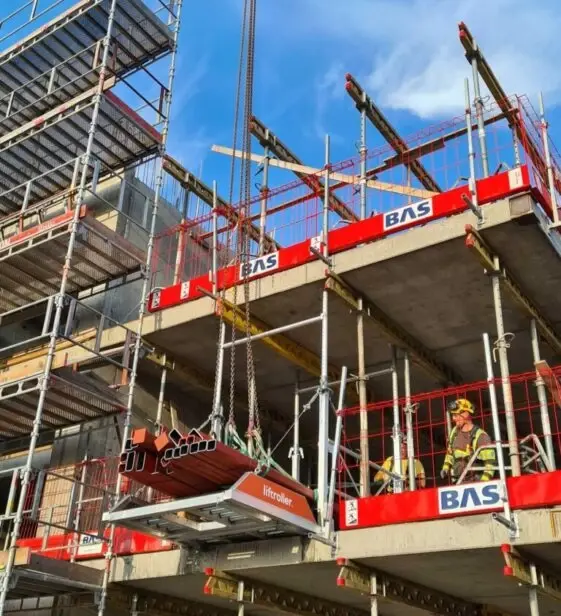
 Opus XVI is the scenario in miniature: a protected facade, no fixing allowed, and no room outside for a bay.
What do you do when there is no room for a bay?
Scenario one. Boundary to boundary site in the CBD, no setback, traffic on two sides and a bus zone on the third. A loading bay projects out from the scaffold line, needs a truck standing area underneath and swing room for the load. None of that exists. Three options:
- A mobile loading platform that sits inside the building and locks into an existing opening. Liftroller Wall does this. Rated to 1,200 kg, assembles in roughly 10 to 15 minutes without tools, no external space and no scaffold.
- Crane lifts onto a temporary landing deck. Works, but you buy crane time and you are tied to the crane programme and the weather.
- The building's own lift, if the owner allows it. Fine for light loads, slow for pallets.
If the problem is purely space, the platform is the shortest path. See our loading platform hire in Sydney page.
What if the council will not give you a permit?
Scenario two. You have the room but you cannot use it. A bay that oversails the footpath or road needs a road occupancy or hoarding approval, and in the City of Sydney and most inner councils those carry conditions: approved hours, pedestrian gantry requirements, traffic control, sometimes a traffic management plan. Refusal is rarer than approval on conditions that make the bay useless, such as delivery windows that miss your truck bookings.
The fix is to get the operation off the public domain. If nothing is built over the footpath and no load crosses the boundary at height, the permit question changes shape. Conditions differ by council and by street, so confirm before you commit.
Weighing up Liftroller for a job?
Leave your details and we'll call you back with pricing and the right system for the load.
What if you cannot fix anything to the facade?
Scenario three. Heritage masonry you cannot drill. A completed precast or curtain wall facade with a warranty that dies the moment you tie into it. Glazing where the installer has said in writing that nothing gets fixed to the frames. Scaffold gets expensive here, because a scaffold that cannot tie in has to be freestanding, which puts you back into the space and permit problems above.
Liftroller Wall was built for this. The patented lock works against the opening itself, so there is no drilling, no facade damage and no making good afterwards. On the Opus XVI hotel remodelling with a protected facade the facade could not be touched and material still reached every floor. Behind glass, see our curtain wall solutions.
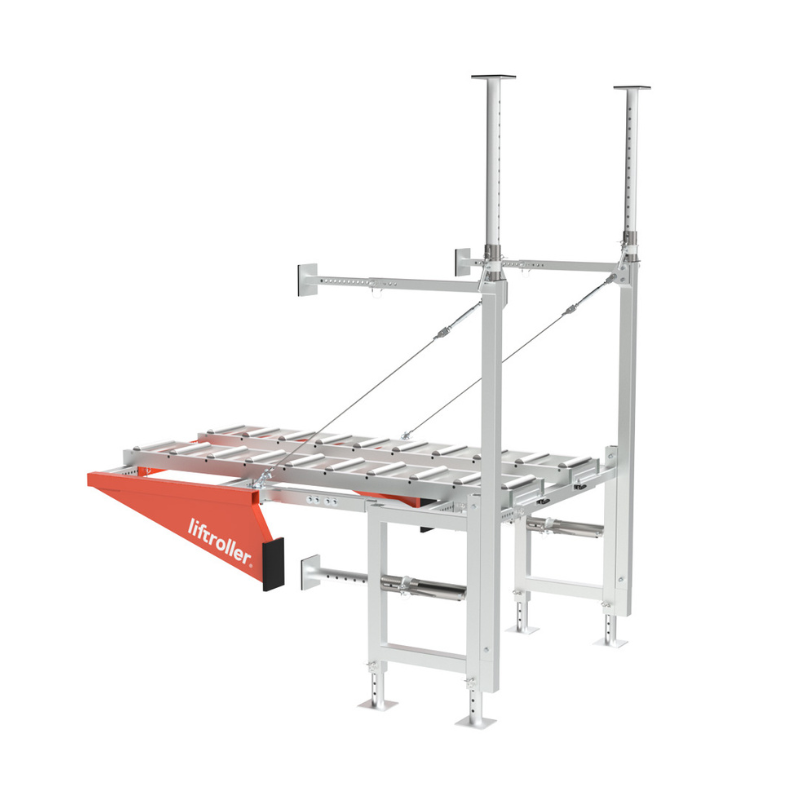 The Liftroller Wall needs no scaffold and no external space, which is why it survives the bay coming down.
What happens when the scaffold comes down before the fit-out finishes?
Scenario four, and it catches the most jobs. Scaffold goes up for structure and facade. Facade completes. The scaffold comes down, because scaffold on hire is a running cost and nobody pays for steel doing nothing. Then the fit-out starts: plasterboard, framing, flooring, joinery, tiles, plant. That is when the tonnage moves, and the bay is on a truck back to the yard.
Why do the scaffold and delivery programmes never line up?
Different people set them. The scaffold programme follows structure and facade, owned by the site team and the scaffold subcontractor. The delivery programme follows the fit-out trades, set later, with their own lead times. Nobody puts the two side by side and asks the obvious question: on the day the most material lands, what is it going up in?
Check it yourself. Put the scaffold strike date next to your plasterboard, flooring and joinery dates. If the strike date lands first, the trades that move the most material are standing in a gap.
Three ways out. Extend the scaffold and keep paying hire on the lot to run one deck. Bring a scaffold back later and pay a second mobilisation. Or switch methods at the changeover, which is what most fit-out contractors do. Liftroller Floor then moves the pallet along the slab, an electric material transport wagon rated to 1,200 kg does it with fewer hands, and a Liftroller Stacker lifts pallets to working height. Our city centre fit-out logistics cheat sheet sets out the order, and the Paris renovation of 450 apartments shows the same switch at scale.
How do the alternatives compare to a scaffold loading bay?
| Method | External space | Fixing required | Tied to scaffold programme | Setup time | Capacity | Moves between floors |
|---|---|---|---|---|---|---|
| Scaffold loading bay | Yes, plus truck zone | Usually, ties into facade | Yes | Days, plus design and approval | Per scaffold design | Fixed, relocation is a scaffold job |
| Mobile platform (Liftroller Wall) | No | No, locks into the opening | No | 10 to 15 minutes, no tools | 1,200 kg | Yes, to any suitable opening |
| Crane and landing deck | Yes, swing and standing zone | Deck usually fixed | Tied to crane programme | Deck build plus crane booking | Per deck design | Yes, if the crane is free |
| Building goods lift | No | No | No | Protection install only | Per lift rating, often low | Yes, no pallet handling |
| Internal transport only | No | No | No | Same day | Up to 1,200 kg on the E Wagon | Needs a lift or platform |
What actually drives the cost?
Five things, and none of them is the day rate: duration, mobilisations, council approvals, rework such as making good a drilled facade, and labour per pallet. The last one is the figure nobody measures and usually the biggest. Our cost savings breakdown shows where the hours go. For rates, talk to our Sydney team or call 1300 222 300.
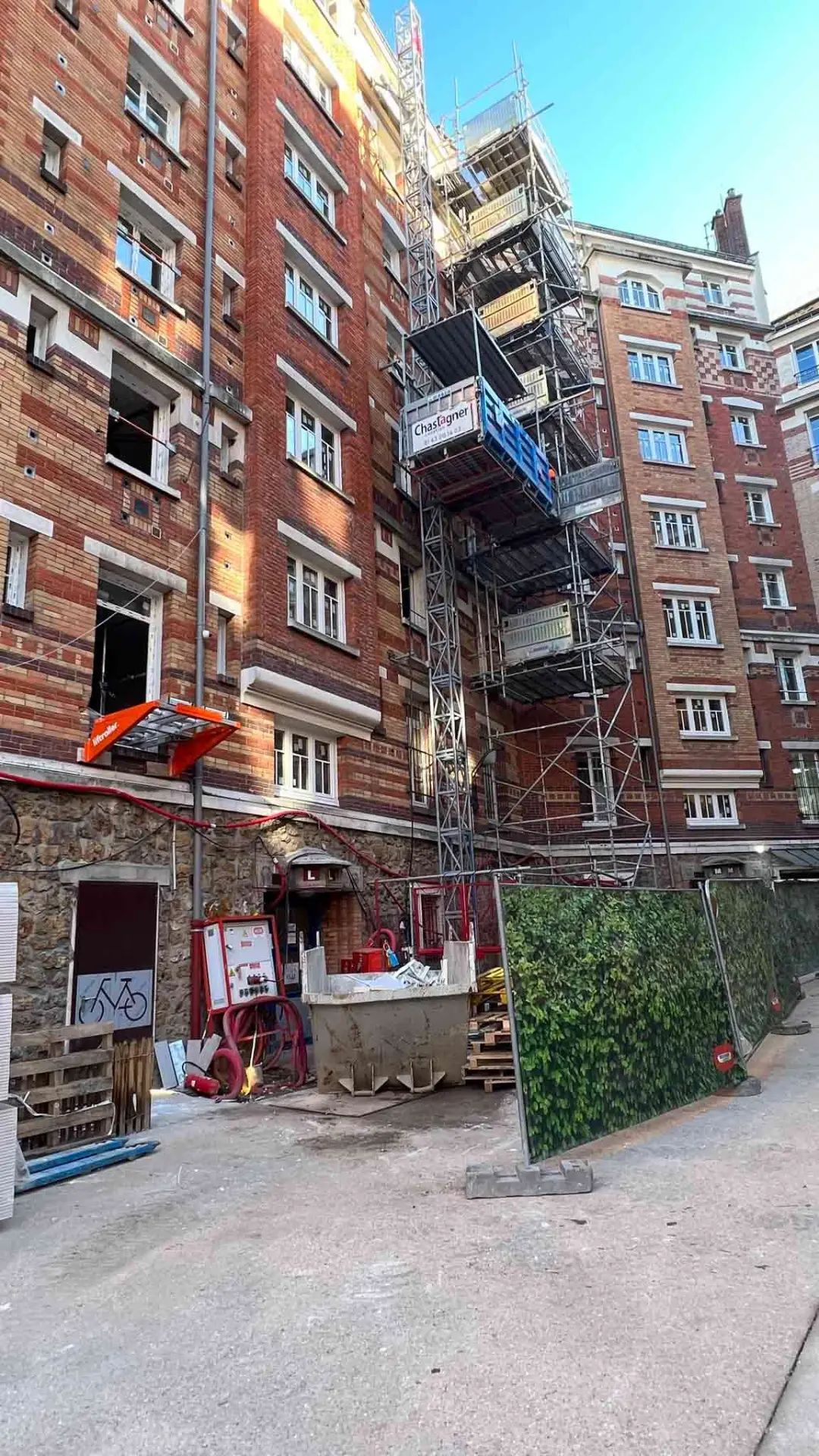 On the Paris refurbishment of 450 apartments the material went in through the windows, floor by floor, with no bay at all.
Where to go from here
Work backwards from the constraint. No space, use a method that needs none. No permit, get the operation inside the boundary. A facade you cannot touch, rule out fixings. A strike date mid-job, plan two methods. Send us the site address, the levels and your delivery programme and we will book a free on-site trial.
Quick answers
Frequently asked questions
You still manage anything touching public land, normally the truck at the kerb. What changes is that you are not building a structure over the footpath or road, so the hoarding and oversail question goes away. Rules differ by council and by street, so confirm before you commit.
On most fit-out and refurbishment jobs, yes, provided you have suitable openings and truck access. Liftroller Wall is rated to 1,200 kg and locks into an existing window or facade opening, so it does the same job without external space. For very large single items, a crane still wins.
It works with existing window and facade openings, so you use the building as it is rather than modifying it. Openings vary too much between buildings for a rule of thumb, so a site check is the practical answer. Liftroller runs a free on-site trial from our Hillsdale base.
No. The patented lock works against the opening without drilling or fixing, so there is nothing to make good when you finish. That is why it gets used on heritage buildings and on completed curtain wall facades where a fixing would void the installer's warranty.
Loading and unloading at height is high risk construction work, so you need the usual controls: a safe work method statement, competent operators, edge protection, exclusion zones below the load, and equipment used within its rated capacity. Rated capacities are limits, not targets, so plan the heaviest load first and check the method against it.
Ideally when the scaffold programme is first drafted, because that is when the gap is still visible. In practice most people call once the strike date is confirmed. There is still time then, because a mobile platform does not need the design and approval cycle a bay needs.
Talk to our team about Liftroller
Tell us about your loads and access constraints and we'll recommend the right Liftroller setup. No obligation.
Related Articles
Loading Platform Hire in Australia: Types, Costs and How to Choose
The four ways to land material at height in Australia, what separates them, what actually drives the hire cost, and how to work out which one belongs on your site.
Loading Platforms on Sydney Sites: What Works in the CBD and Inner Suburbs
Road approvals, night work limits, heritage facades and the date your crane leaves site decide the landing method on a Sydney job. Here is what works where, from The Rocks to a Surry Hills warehouse conversion.
What Drives the Cost of Loading Platform Hire in Australia
The weekly rate is the smallest part of what you pay. Here is what actually moves a loading platform hire cost, and the six things to ask for so you can compare two quotes properly.