Manual Handling on Construction Sites: The Rules and How to Cut the Risk
Get a quote for your site
Leave your details and we'll call you back with pricing and the right system for the job.
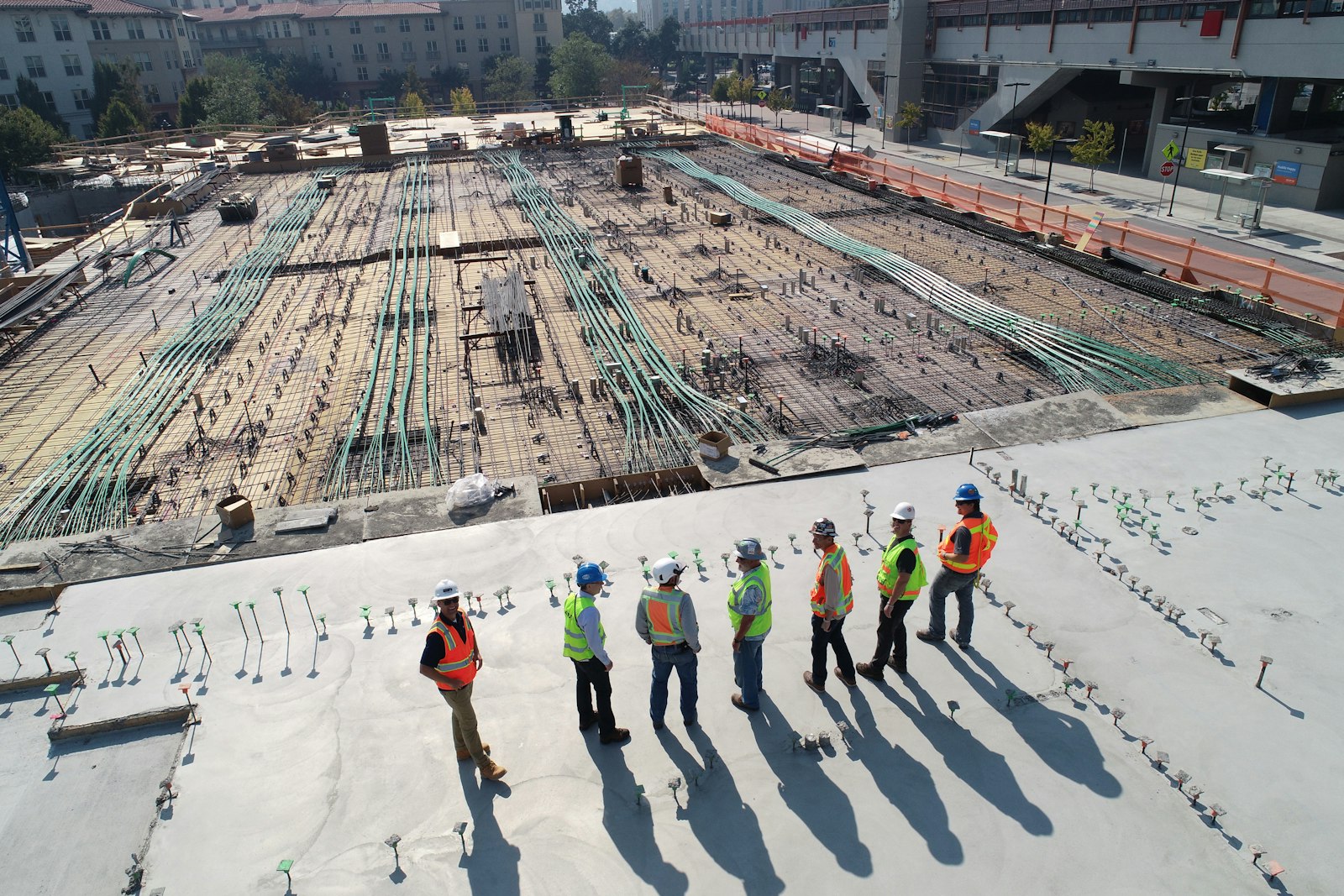
Moving material by hand injures more people on Australian building sites than almost anything else, and the law does not start with lifting technique. It starts with a duty to eliminate the risk so far as is reasonably practicable, then reduce whatever is left. If your manual handling plan is a toolbox talk and a 25 kg sticker, you are working the hierarchy of control from the bottom up.
What counts as a hazardous manual task in construction?
A manual task is any work where someone lifts, lowers, pushes, pulls, carries, holds or restrains a load. It becomes a hazardous manual task when the way it is done creates a risk of injury. The WHS Regulations describe that by characteristics, not by a weight limit:
- Repetitive or sustained force
- High or sudden force
- Repetitive movement
- Awkward or sustained posture
- Exposure to vibration
On site that covers a lot of ordinary work. Plasterboard carried up a stair void because the hoist is booked out. Render bags lifted off a pallet and stacked at shoulder height.
Notice what is missing: a number. There is no legal single person lift limit in Australia. A 12 kg box carried 40 metres, six times an hour, up a level is a hazardous manual task. A 30 kg item lifted once from bench height by two people may not be. Distance, frequency, posture and floor condition all count. A site that sets a blanket weight limit has named the hazard and controlled almost none of it.
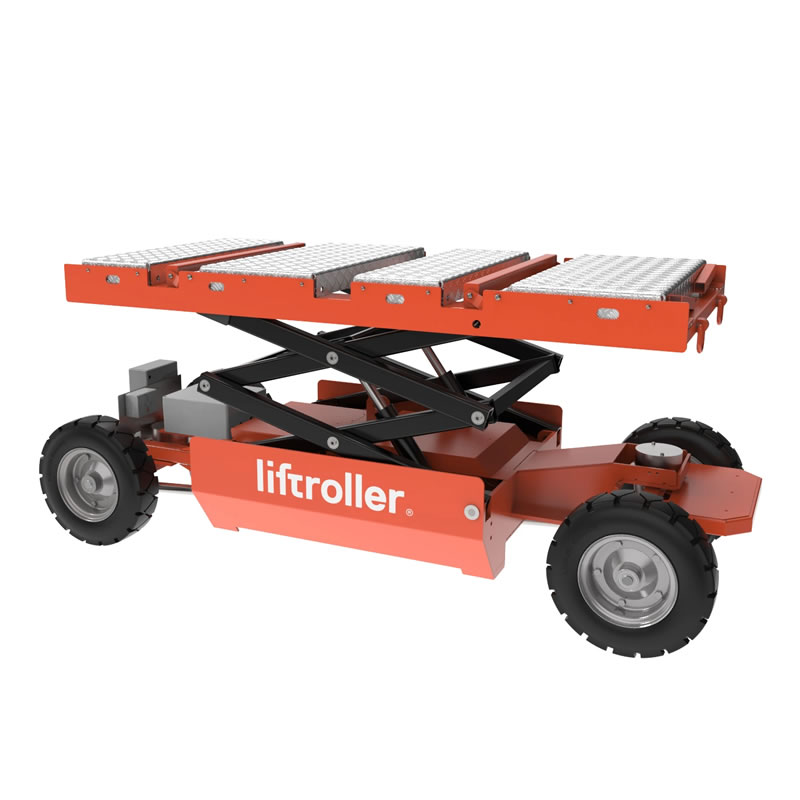 Eliminating the carry beats training people to do it safely. The Liftroller E Mover makes moving material a one person job.
Why does material handling cause so many serious site injuries?
Body stressing injuries (sprains, strains, disc and shoulder damage) are one of the largest injury categories in Australian construction, and moving material causes most of them. Check current SafeWork NSW figures for your state rather than a number in a blog post. The pattern holds: falls get the headlines, manual handling generates the volume, and the cost lands as lost time.
A building site is harder than a warehouse. The load path changes weekly, so the ten metre carry in week one is sixty metres and a stair climb by week six. And nobody owns the middle: the crane owns the lift, the hoist owns the vertical run, the trade owns the fix, and the metres in between belong to whoever is holding the sheet.
How does the hierarchy of control apply to moving material?
Work down it in order, and use the lower controls only for what you could not design out higher up.
Can you eliminate the carry?
The most effective control is not a lighter load. It is no load. That is a logistics decision, usually made long before anyone picks anything up:
- Land the pack on the floor where it gets installed, not at ground level.
- Sequence deliveries so material arrives after the floor is accessible and before the walls close it in.
- Use a loading platform at the working level so a crane or forklift places the pack a few metres from the fix.
A mobile loading platform does that job. It locks into an existing window or facade opening, takes up to 1,200 kg, and assembles in roughly 10 to 15 minutes without tools or facade damage. The stair carry becomes a short push. The guide to loading platform hire in Australia covers the types and how to choose.
Can you substitute or engineer the movement out?
Where material still has to cross a floor, put mechanical handling equipment under it instead of a person. This rung does most of the practical work on a live site.
The Liftroller Floor system moves material through multi-storey buildings. The E Wagon is an electric transport wagon with remote control, rated to 1,200 kg, so nobody pushes it. The E Mover is a compact electric mover with adjustable height. A powered stacker raises and lowers pallets so nobody lifts off the floor. The Liftroller Trestle weighs 5.8 kg and takes 700 kg, so the platform itself stops being a two person carry. None of it needs operator training or a licence, and material handling becomes a one person job.
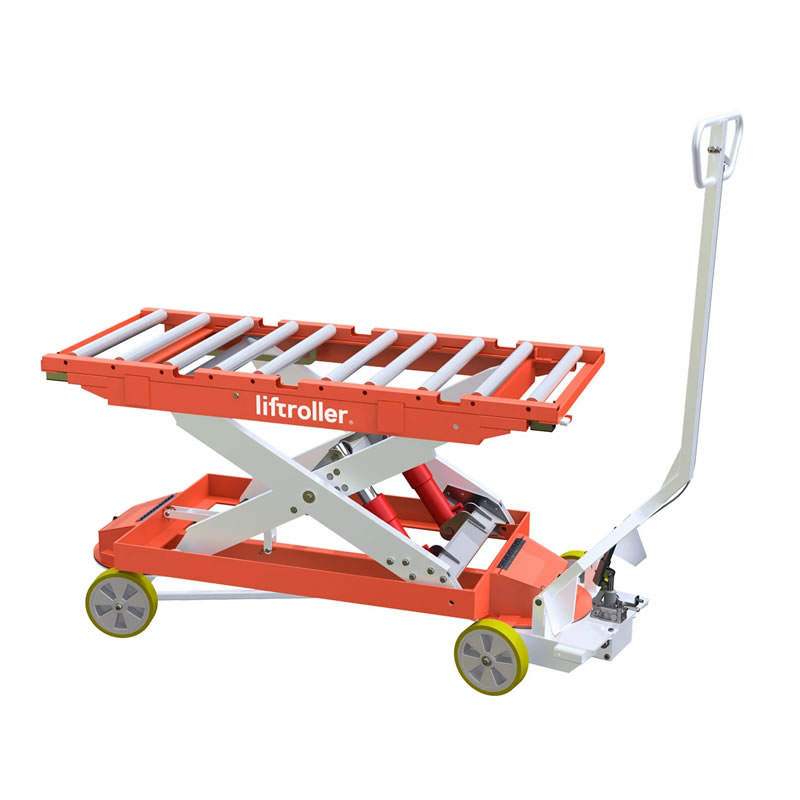 The Liftroller Wagon is the simplest substitution control available: wheels instead of shoulders.
Which administrative controls actually help?
Administrative controls do not change the load, only how people work around it. They sit below engineering controls and need supervision to survive programme pressure.
- Sequence deliveries so material is landed once, not double handled.
- Split loads at the supplier, not on site. Half packs cost more per sheet and far less per injury.
- Set two person lifts for named items and mean it. A two person lift that becomes a one person lift when the offsider is on smoko is not a control.
Where does training and technique fit?
Last, and for a reason. Training does not reduce the weight, shorten the distance or change the posture the task demands. On its own it has a limited effect, which is why the regulations treat it as the last control rather than the first.
Workers still need to know the hazards, the controls and when to stop. But if training is your only control, a regulator will read your risk assessment as incomplete.
The hierarchy of control applied to plasterboard
| Level | Control | On site | How effective |
|---|---|---|---|
| Eliminate | Remove the carry | Pack landed by crane onto a loading platform at the level of fix | Highest. The task no longer exists |
| Substitute | Mechanise the move | Sheets moved on a powered wagon or roller system | High. One person, no lift |
| Engineering | Change the equipment | Adjustable height mover and lightweight trestle | High while the gear is on the floor |
| Administrative | Change the method | Split packs, delivery sequencing, two person lifts | Moderate. Needs daily supervision |
| PPE and training | Change the person | Gloves, boots, lifting technique toolbox talk | Lowest. Does not change the task |
Weighing up Liftroller for a job?
Leave your details and we'll call you back with pricing and the right system for the load.
Why do most sites run this order backwards?
Because the bottom of the hierarchy is the cheapest thing to buy this week. A toolbox talk costs an hour. Rewriting the delivery and landing sequence means talking to the builder, the supplier and three other trades, and much of it has to happen before the slab is poured.
So the spend goes into technique training, the carry stays where it was, and the site reports manual handling as controlled. It is not. The same sheets get carried with better posture, further and more often than the plan ever assumed.
Look at it across a programme rather than a week and the order flips. Removing a repeated carry takes labour hours out of every trade that would have made it and removes the injuries that generate claims. Our breakdown of where the cost savings come from shows where those hours go.
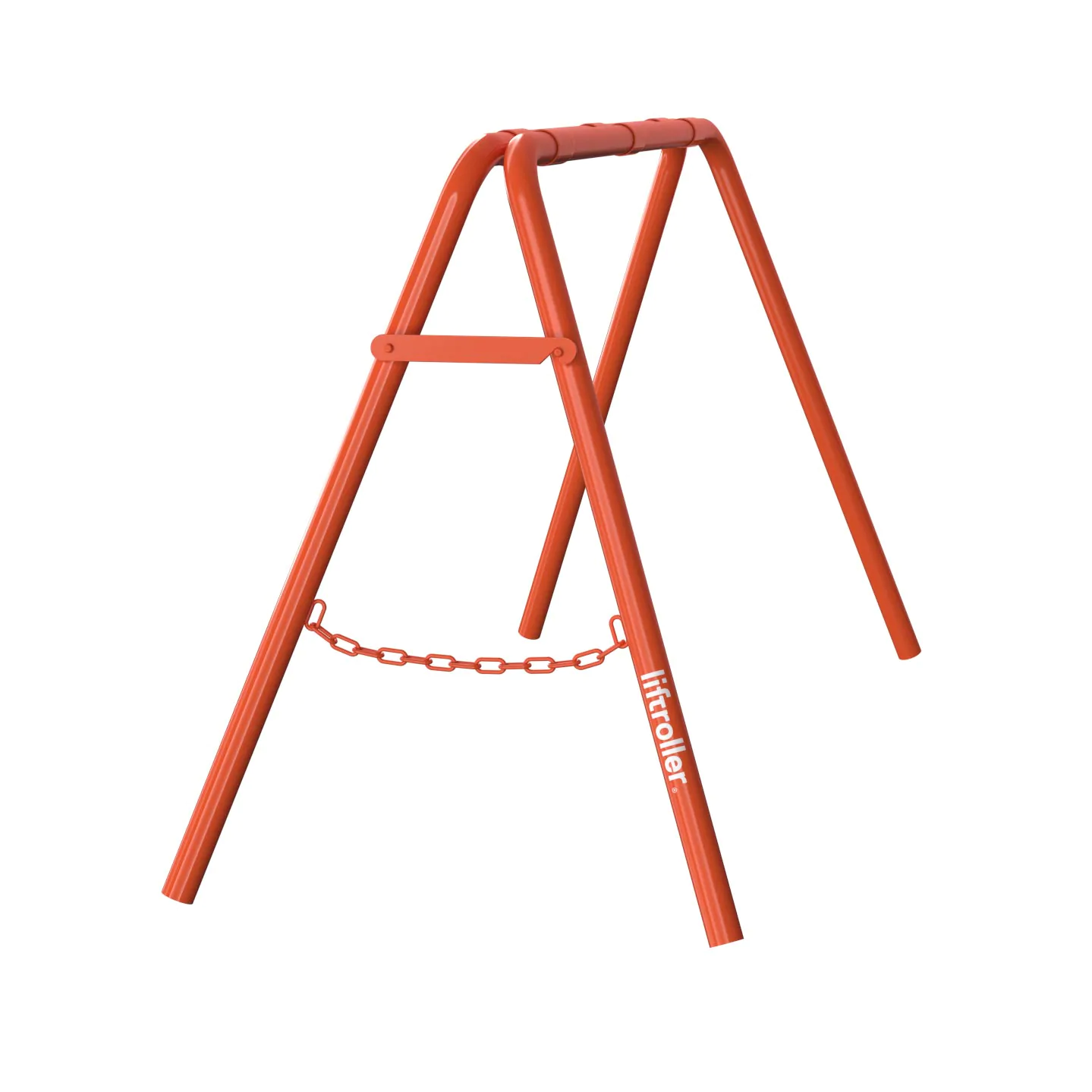 The Liftroller Trestle weighs 5.8 kg and takes 700 kg, so setting up a working height is not itself a hazardous manual task.
What should a safe work method statement cover for moving material?
A SWMS for materials handling should read like a plan for the material, not a lecture on lifting. It should name:
- The material, its weight, pack size and dimensions.
- Where it is landed, at what level, and by what means.
- The route to the fix point, including doorways, ramps, thresholds, level changes and floor condition.
- The equipment used to move it, and who checks it is serviceable.
- What happens when the plan fails. Hoist booked out, route blocked. That is where crews default to carrying, so write the fallback down.
If it cannot answer how this sheet gets from the truck to that wall, it is not a control. It is paperwork.
What is a duty holder expected to do?
If you conduct a business or undertaking, or you have management or control of a workplace, you must manage risks from hazardous manual tasks. You identify them, assess them where the risk is not obvious, control them using the hierarchy, and review when the work changes.
Consulting workers is a legal requirement, not a courtesy. The people doing the carrying know where the pinch points are. Review matters too: a control that worked on level 2 can be useless on level 9 with longer travel and a smaller lift window. Check current SafeWork guidance for your state, since codes of practice get updated. And if your logistics plan forces a subcontractor into a long carry, the risk did not become theirs because they are holding the sheet.
Where to start on your job
Pick the two worst carries on your job. Not the heaviest items, the ones that happen most often over the longest distance. Then work out what it would take to land that material where it is used. If you want help, talk to our Sydney team about a free on site trial. We are based in Hillsdale and you can reach us on 1300 222 300.
Quick answers
Frequently asked questions
No. Australian WHS law sets no maximum weight one person can lift. Weight is one factor beside carry distance, frequency, posture, grip and floor condition. A site rule of thumb helps sort jobs quickly, but you still have to assess the task and work down the hierarchy of control.
Manual handling is the everyday term for moving something with your body. Hazardous manual task is the legal term, and it applies when the work involves repetitive or sustained force, high or sudden force, repetitive movement, awkward posture or vibration. The duties in the regulations attach to hazardous manual tasks, so use that phrase in your risk register and SWMS.
Yes. Workers need to understand the hazards, know how the controls work and know when to stop. Training sits underneath the engineering controls, not instead of them. Simple gear helps: the Liftroller system is built so material handling is a one person job with no operator training or licence, which removes one reason equipment stays in the shed.
Eliminating the carry. If the pack lands on the floor where it is installed, close to the fix, nobody moves it far by hand. Everything below that on the hierarchy manages a task you chose to keep. In practice: plan the landing sequence early and use loading platforms at the working level.
Land the packs on the floor of fix instead of at ground level, then move them across that floor mechanically. A mobile loading platform locks into an existing window opening so a crane places a pack straight onto the level, and a powered wagon takes it to the room. Our plasterboard and Gyprock handling page sets out how it fits together.
Everyone with management or control of the work has a duty, and those duties overlap rather than transfer. The principal contractor sets the logistics that decide whether a long carry exists. The subcontractor controls how their crew works. Both must consult each other and their workers, and the risk never sits only with whoever is holding the load.
Talk to our team about Liftroller
Tell us about your loads and access constraints and we'll recommend the right Liftroller setup. No obligation.
Related Articles
Loading Platform Hire in Australia: Types, Costs and How to Choose
The four ways to land material at height in Australia, what separates them, what actually drives the hire cost, and how to work out which one belongs on your site.
Loading Platforms on Sydney Sites: What Works in the CBD and Inner Suburbs
Road approvals, night work limits, heritage facades and the date your crane leaves site decide the landing method on a Sydney job. Here is what works where, from The Rocks to a Surry Hills warehouse conversion.
What Drives the Cost of Loading Platform Hire in Australia
The weekly rate is the smallest part of what you pay. Here is what actually moves a loading platform hire cost, and the six things to ask for so you can compare two quotes properly.